
I run a small mobile dog grooming van and spend most of my week trimming nails in driveways and tight parking spots. Over the years, I have learned that how I hold the trimmers matters just as much as how sharp they are. Dogs notice tension in your hands right away, and a bad grip can turn a routine trim into a wrestling match. I have adjusted my technique through trial and error, a few mistakes, and a lot of repetition. This is how I actually hold dog nail trimmers in real work conditions.
Why Grip Matters More Than Most People Think
The first thing I tell new assistants is that the dog feels your hands before it feels the blade. If your grip is stiff or awkward, the dog senses that pressure and pulls away. I learned this early on with a nervous spaniel that would flinch even before the trimmer touched the nail. Once I relaxed my hand and changed the angle, the same dog stood still for four nails in a row.
Your wrist position plays a big role here. If your wrist is bent too far inward, you lose control, and your squeeze becomes uneven. Over a long day, that strain adds up, and your precision drops. I trim anywhere from 20 to 30 dogs a week, so small adjustments in grip have saved my hands more than any tool upgrade ever did.
Grip also affects visibility. When your fingers are in the wrong place, you block your own view of the quick. That is how people cut too short. A clean view matters more than speed.
How I Position My Fingers on Different Trimmers
I mostly use scissor-style trimmers, and my grip stays consistent across brands. My thumb goes through one loop, and I rest my ring finger in the other while my index finger sits along the outside for control. That index finger is key because it guides the angle, preventing the tool from wobbling.
There was a period where I tested guillotine-style trimmers on small breeds, and I had to adjust my hold slightly to keep the nail centered. I found a helpful breakdown at dog nail trimming tips that matched what I had figured out the hard way during a busy spring season. It confirmed that keeping your fingers relaxed but stable is the difference between a clean cut and a crushed nail edge.
For larger dogs, I tighten my grip just a bit, but I never clamp down fully before the cut. That tension travels straight into the dog’s paw. Instead, I position the blade, pause for a second, and then apply pressure in one smooth motion. No hesitation mid-cut. That pause matters more than people think.
Handle size also changes things. If the loops are too big, I adjust by sliding my fingers slightly forward to maintain control. Small details like that become second nature after a few hundred trims.
Stabilizing the Dog’s Paw Without Forcing It
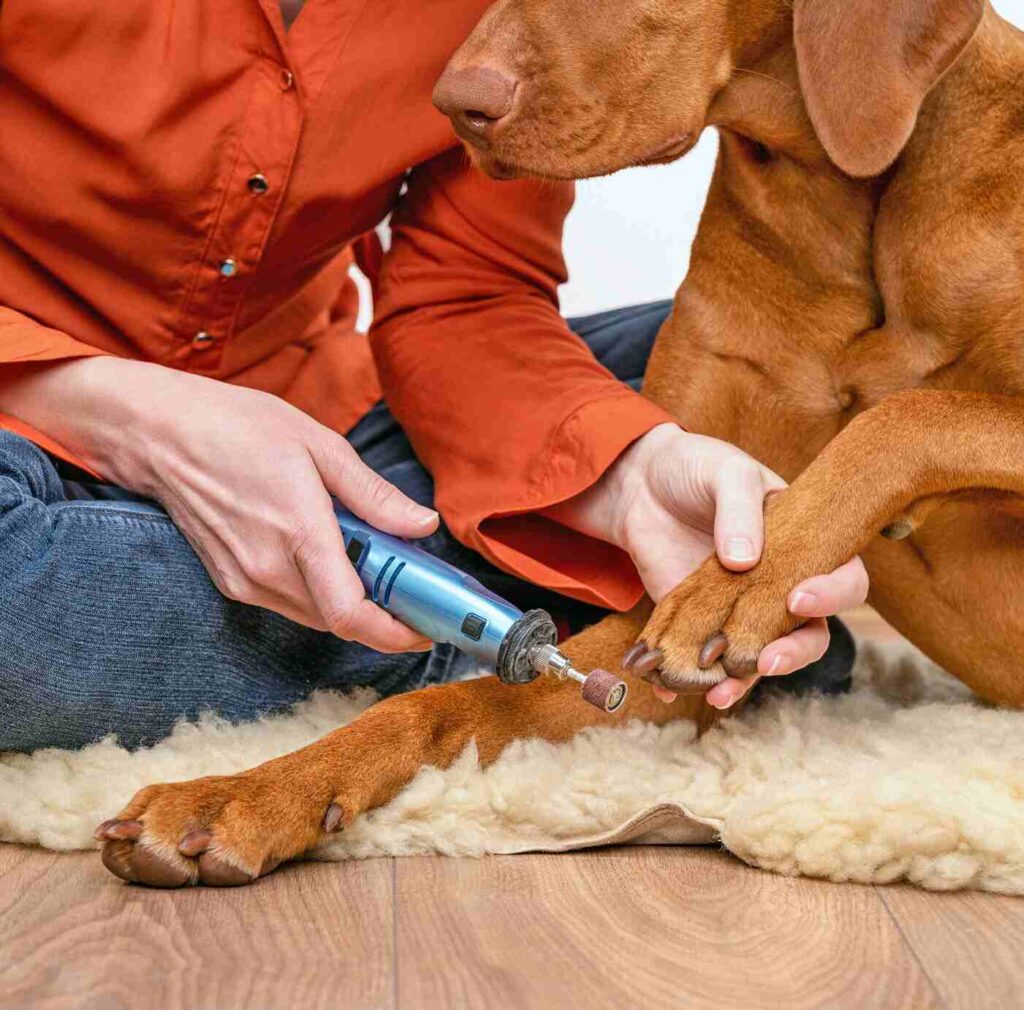
Holding the trimmer is only half the job. The other half is how you hold the paw. I use my non-dominant hand to support the paw from underneath, not from the top. This keeps the dog from feeling pinned down. It also lets me move the paw gently, rather than fighting it.
One trick I use is to press lightly on the pad with my thumb while holding the trimmer in my other hand. This extends the nail just enough to get a clear view. It works well on dogs that tend to curl their toes inward. Simple, but effective.
I remember a large retriever last summer that would pull his paw back every time I lifted it. Instead of holding tighter, I changed my angle and worked closer to the ground while keeping his leg in a natural position. Within minutes, he stopped resisting. Less force often works better.
Keep your movements small. Big adjustments make dogs nervous. I aim to clip one nail every few seconds once the dog settles, but I slow down if I feel tension building.
Common Mistakes I See With Grip and Control
The most common mistake is gripping the trimmer like a pair of pliers. That heavy squeeze makes your hand shake, especially after a few nails. It also causes uneven pressure, which can split the nail rather than cut it cleanly. I see this a lot with new pet owners.
Another issue is holding the trimmer too far back on the handle. That reduces leverage and makes each cut harder than it needs to be. I keep my fingers close to the pivot point for better control. It feels strange at first, but it quickly becomes natural.
People also rush. Fast hands, messy results. I get why they do it, especially if the dog is restless, but speed without control leads to mistakes. I have had customers tell me they avoid trimming altogether after one bad experience. That usually traces back to poor grip and rushed cuts.
Angle is often ignored. Cutting straight across is not always ideal, especially on curved nails. I adjust the angle slightly to follow the natural shape. It reduces pressure and leaves a smoother edge.
What Changed My Technique Over Time
In my first year, I used to switch grips constantly, trying to find something that felt right. Over time, I realized consistency matters more than perfection. Once I settled into a stable grip, my speed improved, and dogs reacted better. That came after trimming well over a thousand nails.
I also started paying attention to my own comfort. If my hand felt tired after a few dogs, I knew something was off. Small tweaks in finger placement made a big difference over long days. My wrist stopped aching by the end of the week.
Experience teaches timing. There is a rhythm to trimming nails that you only pick up after repeating it again and again. Grip, angle, pressure, release. It becomes automatic. Dogs notice that calm rhythm and respond to it.
Some days are still challenging. That is normal. But a steady grip gives you a solid starting point every time.
I still adjust based on the dog in front of me. No two paws feel exactly the same, and no single grip works in every situation. But once you understand how your hand should feel on the trimmer, everything else becomes easier to manage. That is the part most people overlook until they have struggled with it long enough.