
I’ve spent years restoring furniture that cats have slowly turned into scratching posts, especially sofas in small family homes and apartments. Most of my work comes from people who love their pets but also want their living room to stop looking worn out after a few months. I approach sofa protection from a practical repair perspective, not theory, because I’ve seen what actually holds up over time. Cats do not destroy furniture out of spite; they follow instinct, and that changes how I solve the problem.
Why cats target sofas
When I walk into a home with scratched sofas, I usually ask where the cat spends most of its time during the day. In many cases, the sofa sits near a window or a central gathering spot, making it a high-traffic comfort zone for the animal. Cats love soft corners. They also stretch after naps, and sofa arms are the perfect height for that motion.
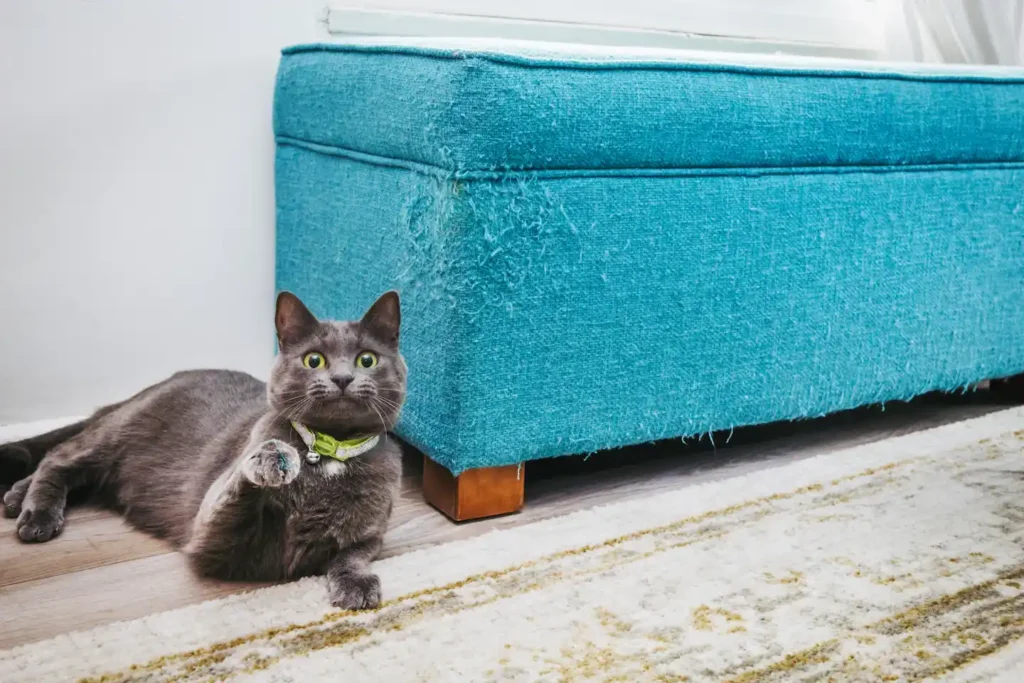
Over time, I’ve noticed that fabrics with loose weaves or soft microfibers tend to show damage more quickly than those with tighter weaves. A customer last spring had a beige fabric sofa that looked fine for two years before the cat started pulling threads from the armrest. Once that starts, it spreads quickly because cats return to the same texture again and again. The issue is less about the cat and more about giving it the wrong surface in the wrong place.
There are also scent markers involved that people often overlook. Cats use scratching to mark territory, and sofas tend to absorb human and pet smells easily. I’ve seen cases where moving a scratching post next to the sofa reduced damage within a week. Not overnight, but noticeably.
Training and outside help that actually works
In more stubborn cases, I’ve worked with pet owners who needed structured guidance, and I once recommended a local behavior-focused service through a local upholstery protection service after a client’s cat repeatedly damaged the same corner despite multiple deterrents. That home had already tried sprays, covers, and even repositioning furniture, but nothing held for long without consistent behavior adjustment. I stayed involved for a few weeks, checking progress during follow-up visits and adjusting small details, such as furniture layout. What I learned from that situation is that consistency matters more than any single product or trick.
Training a cat away from a sofa is not a one-time action. I usually suggest combining redirection with environmental changes so the animal naturally shifts its habits rather than being forced away. When scratching posts are placed too far from the sofa, they are often ignored. Once they are moved closer, especially near the cat’s favorite resting spots, the change becomes easier.
I’ve seen some owners give up too early, assuming the behavior cannot be changed. That is rarely true. It just requires repetition and small adjustments over a couple of weeks rather than expecting immediate results.
Physical barriers and protective materials
From a repair standpoint, I rely heavily on physical protection because it reduces damage before it starts. Sofa covers, armrest guards, and even clear adhesive films can make a noticeable difference when applied correctly. The mistake I see most often is choosing protection that does not match the sofa’s texture or usage pattern.
Leather sofas respond differently compared to fabric ones. For leather, I often recommend properly anchored protective throws, as adhesive solutions can sometimes damage the finish if removed too aggressively. Fabric sofas, on the other hand, benefit more from tight slipcovers that do not shift when the cat jumps up or down.
There is also a simple but effective method I’ve used in several homes: reinforcing the most targeted areas before damage begins. One family I worked with had a new sofa and wanted to prevent any scratching at all costs. We added corner protectors and slightly rotated the orientation so that the most attractive scratching angle was blocked. That sofa stayed in good condition for over a year without visible wear.
Texture also matters more than people expect. Cats dislike certain slick or slightly uneven surfaces, and I’ve tested materials that reduce interest without affecting human comfort. It is not a perfect solution, but it reduces repeated scratching in high-risk zones.
Creating a long-term balance at home
Most successful cases I’ve handled involved a mix of prevention and acceptance. A sofa will always be part of a cat’s environment, so completely eliminating scratching behavior is unrealistic. Instead, the goal becomes guiding where and how it happens.
I usually tell owners to observe patterns for at least a week before making changes. One customer noticed her cat only scratched after evening meals, which helped her place a scratching post right near the feeding area. That small observation changed everything without adding new products or costs.
Durability also depends on regular maintenance. Loose threads should be trimmed immediately, as they invite further pulling. I’ve repaired sofas where a single pulled loop turned into a full armrest tear in under a month simply because it was ignored too long.
Soft barriers, training adjustments, and smart placement work together better than any single method. Once those pieces align, most homes reach a point where the sofa stays presentable without constant worry or repeated repairs.
In the end, protecting a sofa from cats is less about stopping behavior entirely and more about shaping the environment so the furniture is no longer the easiest option for scratching. When that balance is right, both the sofa and the cat can exist in the same space without constant conflict.