
As someone who has spent years working closely with cats in a small coastal veterinary clinic, I’ve seen more than a few owners come in with the same question about seafood. Shrimp is one of those foods people assume is harmless because it comes from the sea and smells appealing to pets. I’ve watched curious cats steal a piece off a plate faster than their owners can react. Over time, I’ve learned that the answer isn’t a simple yes or no; it depends heavily on how the shrimp is prepared and how the cat reacts to it.
How Cats React to Shrimp in Real Situations
In my clinic days, I once had a customer bring in a young tabby that had eaten a few pieces of fried shrimp from a family dinner. The cat seemed fine at first, but later developed mild stomach upset that resolved after a day of rest and a bland diet. That experience stuck with me because it showed how quickly curiosity can turn into digestive discomfort. Most cats are attracted to shrimp because of the strong smell and protein content, but their systems are not designed for seasoned or fried seafood.
When I later consulted a local veterinary clinic, I found that many similar cases had been recorded over time, especially in homes where seafood is regularly cooked. The advice I often share now is based on both clinical observation and practical experience with dozens of pet owners who were unsure about feeding human food to cats. I’ve noticed that plain, properly cooked shrimp in small amounts usually causes no major issue for healthy adult cats, but anything beyond that becomes unpredictable. Cats with sensitive stomachs react even more strongly, sometimes even to small portions.
I remember one older cat that would patiently sit near the kitchen whenever shrimp were being peeled. The owner thought it was harmless to offer a bite every time. Eventually, the cat developed intermittent vomiting episodes that disappeared only after shrimp was completely removed from its diet. That case taught me how repeated exposure can sometimes create patterns of intolerance rather than immediate reactions. It’s not always dramatic, but it builds quietly over time.
Nutritional Value and Risks of Shrimp for Cats
Shrimp does contain protein and some useful nutrients like vitamin B12 and omega-3 fatty acids, which sound beneficial on paper. However, I’ve seen enough cats over the years to know their nutritional needs are already fully met by properly balanced cat food. Adding shrimp doesn’t provide a meaningful advantage unless it is used occasionally as a treat. The issue begins when shrimp becomes a habit or replaces proper meals.
Raw shrimp is something I always advise against because of the risk of bacteria and parasites. I once dealt with a case where a cat developed digestive infection symptoms after sneaking raw shrimp left on a counter during seafood prep. Even though the cat recovered, it required medication and close monitoring for several days. Cooked shrimp is safer, but only if it is plain, without salt, garlic, butter, or spices that are commonly used in human cooking.
Another concern I often explain to pet owners is portion size. Cats have small digestive systems, and even a few bites of rich food can overwhelm them. I usually suggest treating shrimp like a rare snack rather than a regular food item. Some cats also show mild allergic reactions, such as itching or soft stools, after eating seafood, which owners only notice after repeated exposure.
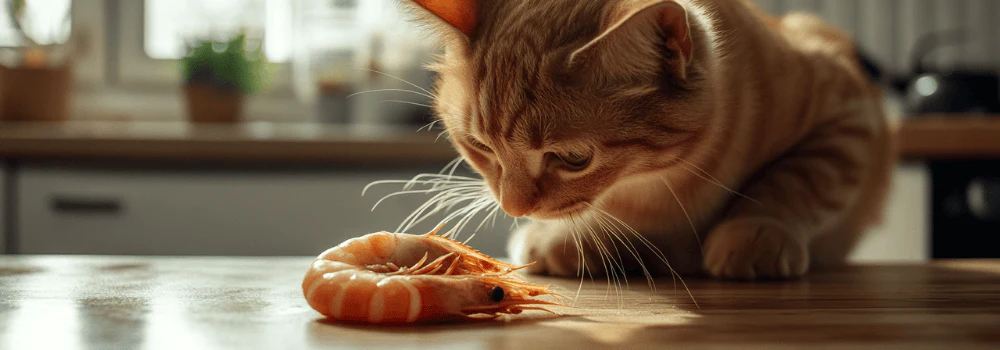
Feeding Shrimp Safely at Home
In my experience, the safest way to offer shrimp is to keep them plain, boiled, and fully peeled. I’ve seen owners make the mistake of giving shrimp tails or shells, which can be a choking hazard or cause intestinal blockage in smaller cats. One customer last spring had to rush their cat in after it swallowed a shell fragment that caused discomfort and loss of appetite for two days. That situation could have been avoided with a bit of preparation.
Portion control matters more than people realize. I usually recommend no more than a small bite-sized piece occasionally, not as part of a meal routine. Cats don’t need variety in the same way humans do, and their digestive system prefers consistency. I’ve seen cats become picky eaters after being frequently offered human food, which later creates feeding problems for owners trying to return them to normal diets.
It also helps to observe your cat closely after trying shrimp for the first time. Some cats show no reaction at all, while others may develop mild digestive changes within hours. I always tell owners to treat it like a test rather than a treat the first time. If anything unusual appears, it’s better to stop immediately rather than repeat the same food and hope for different results.
When Shrimp Should Be Avoided Completely
There are situations where I simply advise against shrimp altogether. Cats with kidney issues, food sensitivities, or chronic digestive problems are better off avoiding seafood treats entirely. I’ve worked with several older cats where even small dietary changes triggered discomfort, and shrimp was one of the first foods we removed during dietary adjustments. Stability in diet often matters more than variety in these cases.
Very young kittens are another group where I stay cautious. Their digestive systems are still developing, and introducing anything other than kitten-formulated food can cause unnecessary stress on their stomachs. I once saw a kitten struggle after being given a tiny shrimp piece by a well-meaning owner who thought it would help with growth. It didn’t cause lasting harm, but it did create avoidable digestive strain.
Cats already on restricted diets due to allergies or a vet-prescribed plan should also avoid shrimp unless specifically cleared by a veterinarian. In my experience, sticking to the prescribed diet usually brings more stability than experimenting with additional protein sources. Even when shrimp seem harmless, the risk often outweighs the benefit for these cats.
Over the years, I’ve learned that shrimp is not dangerous by default, but it’s also not essential in any way for a cat’s health. Most of the issues I’ve seen come from how it is prepared or how frequently it is offered, rather than the shrimp itself. Keeping it occasional, simple, and carefully portioned is usually the safest approach for cats that enjoy the taste.