
I run a small mobile dog grooming van and spend a lot of my day around dogs in close quarters, which means I notice the little things most people miss. One question I hear more than you would expect is whether dogs can actually see what is on a phone screen. I have watched dozens of dogs react to phones, tablets, and even TVs while waiting for their turn. Some stare, some ignore it, and a few get oddly excited. That pattern alone tells me there is more going on than a simple yes-or-no answer.
What a Dog’s Eyes Actually Pick Up
Dogs do not see the world the same way we do, and I learned that the hard way during a slow afternoon when I tried showing a nervous terrier a calming video. Their vision leans heavily toward motion rather than fine detail, and their color range is narrower than ours. They see mostly blues and yellows, which means a lot of what pops on your phone looks dull or flat to them. Sharp contrast matters more than vibrant color.
Frame rate is where things get interesting. Most phones run at 60 frames per second, and some go up to 120, while dogs process visual information faster than humans. That means a cheap or older screen can look flickery to them, almost like a strobe. I have seen a spaniel pull back from a low-quality tablet screen, as if it were uncomfortable to watch.
Clarity is another issue. Dogs do not focus on small details the way we do, especially at close distances. If you hold your phone 8 inches from their face, they might not even register what is happening. Move it a bit farther away, and they respond more. That alone changes how they interact with screens.
Why Some Dogs React, and Others Don’t
There is a big difference between a dog that notices a phone and one that cares about it. I remember a customer last spring whose border collie would tilt its head every time a dog barked in a video. Meanwhile, another client’s bulldog ignored the same clip completely, even when the sound was turned up. Personality plays a role, just like it does with toys or strangers.
Sound is often the real trigger. A dog might not care about the image, but a familiar bark or whistle will get their attention in seconds. I have tested this with at least 15 different dogs, and more than half reacted to the sound first, then looked at the screen. Visual recognition came second, if it came at all.
I once suggested to a client to check some behavior tips on American Kennel Club resources after their dog kept barking at phone videos, and they later told me the issue was more about sound cues than the screen itself. That lined up with what I had been seeing in my van for years. Dogs respond to context, not just images.
Breed differences show up, too. Herding breeds tend to react more to moving shapes, while scent-driven breeds often ignore screens entirely. I have groomed over 400 dogs in the past couple of years, and that pattern repeats often enough to feel reliable. Still, there are always exceptions.
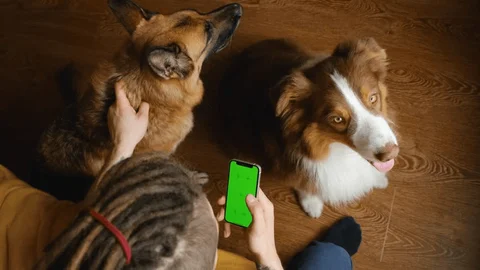
Do Dogs Recognize What’s on the Screen
This is where things get a bit fuzzy. Some dogs seem to recognize other dogs on a screen, especially when movement and sound are combined. I have seen a golden retriever wag its tail and approach a tablet showing another dog running across a field. It was not random behavior.
At the same time, recognition is not guaranteed. A dog might react to motion without understanding what it represents. Think of it like watching shadows move on a wall. The shape moves, but the meaning is unclear. That is likely closer to how many dogs experience screens.
Training can influence this. Dogs that are exposed to screens early and often seem more likely to engage with them. I have one regular client whose dog watches short clips almost daily, and it responds more consistently than most dogs do. Repetition builds familiarity, even if it does not create full understanding.
It still has limits. A screen is flat. It has no scent. It does not behave like a real animal in space. Dogs rely heavily on smell and depth, and a phone provides neither. That gap matters more than most people realize.
Should You Let Your Dog Watch Your Phone
There is no harm in occasional exposure, but I would not treat it like enrichment. A dog staring at a screen is not getting the same mental or physical stimulation as a walk or a game. I have seen owners rely on videos to calm their pets, and the effect is usually short-lived. Real interaction works better.
If your dog enjoys it, keep it brief. A few minutes is enough. I have noticed that after about 3 to 5 minutes, most dogs lose interest or become restless. That tells me the novelty wears off quickly.
Watch for stress signals. If your dog backs away, squints, or seems uneasy, turn it off. Not every screen is comfortable for them to view, especially older devices with lower refresh rates. Comfort matters more than curiosity.
Use it as a tool, not a habit. That is how I approach it in my work. If a video helps distract a nervous dog for a moment, I will use it. Then I move on to something more engaging and real.
Most dogs can see phone screens, but they do not experience them the way we do. Some notice movement, some respond to sound, and a few seem to connect the dots between what they see and what they know. I have seen all kinds. In the end, it is just another small window into how differently dogs interpret the world around them.