
I run a small mobile grooming van outside a busy suburban pet store, and ear cleaning is one of those jobs owners either avoid completely or overdo without realizing it. After handling nervous senior retrievers, itchy bulldogs, and spaniels with heavy wax buildup, I have learned that most dogs tell you exactly how their ears feel long before an infection gets serious.
A clean ear smells neutral, stays pale pink inside, and does not make the dog jerk away every few seconds. The trick is knowing how far to go and when to stop.
What I Check Before I Even Touch the Cleaner
I never start by grabbing cotton pads and solution right away. First, I look at the dog’s posture and behavior because dogs with sore ears usually lean their head to one side or pull away before you even lift the flap. Some scratch constantly at night. Others rub against the sofa until their earlobes turn red.
One thing I learned after years of grooming cockapoos and cocker spaniels is that smell matters more than people think. A strong sour odor usually means more than ordinary wax, especially if the ear canal looks damp or dark brown. Dry tan wax is common. Thick discharge is different.
I also pay attention to the breed and coat type because floppy ears trap moisture much faster than upright ears do. A husky might go months needing very little maintenance, while a basset hound can collect debris after one muddy weekend outside. Summer makes it worse. Humidity changes everything.
If the ear looks swollen shut, I leave it alone and tell the owner to call their vet. I made the mistake years ago of trying to clean a severely inflamed ear on a nervous bulldog, and the dog cried the second the solution touched the skin. That stayed with me.
The Cleaning Routine I Use in My Grooming Van
I keep the process simple because dogs get anxious when people fuss around their faces for too long. Most of the time, I use a veterinary ear-cleaning solution, cotton rounds, and a towel over my lap so the dog feels steady instead of trapped. Some owners buy random products online, though I usually suggest reading through places like how to clean a dog’s ear before trying unfamiliar methods they saw in short videos. Too many people still think cotton swabs belong deep inside a dog’s ear canal.
I lift the ear flap gently and pour enough cleaner to coat the inside without flooding it. Then I massage the base of the ear for about 20 to 30 seconds. You can hear the liquid moving around. Dogs usually calm down during this part once they realize it does not hurt.
After the massage, I let the dog shake its head. That matters. The shaking loosens debris better than digging around with your fingers ever will. I learned early on that fighting the head shake only stresses the dog and sprays cleaner across the walls anyway.
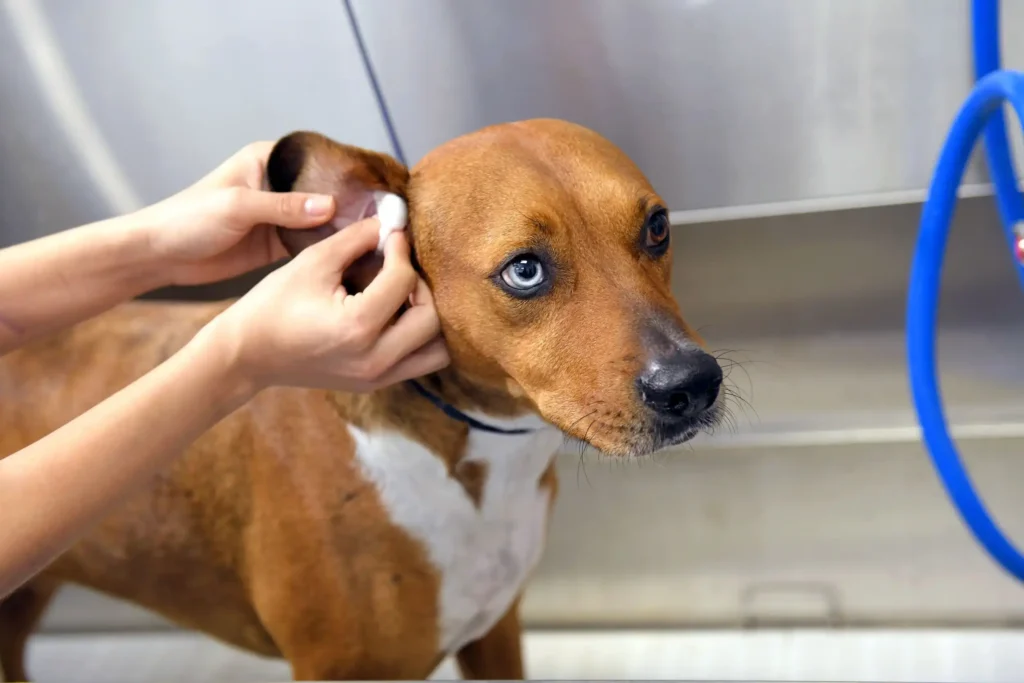
Once the dog settles, I wipe the visible part of the ear with cotton pads until they come away mostly clean. I never push deep into the canal because wax gets compacted farther down when people do that. Ear swabs cause more trouble than most owners realize.
Some dogs need breaks halfway through. A nervous rescue shepherd I groomed last winter would only tolerate about ten seconds at a time before backing away, so I cleaned one ear, let him walk around the van for a minute, then finished the second. Slow works better than force.
Problems I See From Overcleaning
A surprising number of owners clean their dog’s ears too often. I see dogs every month with irritated ear canals because somebody used alcohol wipes every few days, thinking cleaner always means healthier. Skin inside the ear is delicate. Once it dries out, dogs start scratching more, which creates another cycle of irritation.
There is also a difference between dirty ears and infected ears. A little wax is normal. Dogs are supposed to have natural oils in the ear canal, and stripping them away constantly can make the ear more sensitive over time. I usually tell clients that once every few weeks is enough for most dogs, unless their vet recommends otherwise.
Water causes plenty of problems, too. I deal with this a lot during warmer months because dogs swim in ponds, kiddie pools, or backyard sprinklers almost daily. Moisture gets trapped under heavy ear flaps and sits there for hours. That warm, damp space turns into trouble fast.
One customer last spring cleaned her Labrador’s ears every other day because she thought the dog had allergies. The ears ended up raw and flaky from repeated scrubbing. Once she backed off and stopped using harsh wipes, the redness eased within a couple of weeks.
How I Handle Dogs That Hate Ear Cleaning
Some dogs freeze during grooming. Others turn into spinning tornadoes the second you touch an ear. I have worked with both, and the biggest mistake people make is rushing because they want the job over quickly.
I keep my voice low and my movements predictable. Sudden grabbing makes dogs suspicious fast, especially rescues that already dislike handling around the face. Food helps too. Tiny treats between steps can completely change the mood of the session.
Older dogs sometimes struggle because arthritis makes it painful to hold certain positions. I groomed a senior golden retriever for years, who tolerated ear cleaning much better while standing instead of sitting because his hips were stiff. Little adjustments matter more than expensive tools.
There are still dogs that need professional help or even medication before anyone can safely clean their ears. That is fine. A dog snapping from pain is communicating something important, and ignoring it usually leads to worse problems later.
What Makes Me Recommend a Vet Visit Right Away
I can clean ordinary wax and dirt all day long, but there are signs I do not mess around with. Blood, thick yellow discharge, balance problems, and swelling around the ear opening all push the situation beyond routine grooming. A bad infection has a distinct smell that fills the room almost immediately.
Head shaking that lasts for days is another warning sign. So is repeated scratching after cleaning. I once saw a terrier mix that kept pawing at one ear every few minutes despite regular maintenance, and the vet later found a foxtail lodged deep inside the canal. Grooming could never have solved that.
Some dogs develop chronic yeast infections linked to allergies or skin conditions. Those cases usually cycle back every few months unless the root issue is also addressed. Leaning alone will not fix food sensitivities, environmental allergies, or underlying inflammation.
I also tell owners to trust changes in behavior. Dogs that suddenly avoid touch around the head or stop enjoying grooming appointments are often uncomfortable long before obvious discharge appears. Quiet signs count.
Most dogs do not need perfect ears. They just need comfortable ones. I still clean my own spaniel’s ears on the tailgate of my van after muddy weekends, and even after years of grooming, I keep the process basic because simple routines tend to work best over time.