
I run a small in-home dog mobility service in western Pennsylvania, and most of my work involves older dogs that suddenly struggle with basic things around the house. Stairs are usually the first serious problem owners notice because the hesitation becomes obvious fast.
A dog that used to race upstairs for bedtime now stands at the bottom and stares. I have seen strong dogs freeze halfway up six carpeted steps because their back legs could no longer trust the movement.
Figuring Out Why the Stairs Became a Problem
Most owners assume their dog is just getting tired, but stairs usually expose a more specific issue. Arthritis is common, especially in Labradors, Shepherds, and larger mixed breeds, in dogs over about 9 years old. I also see dogs with weak hips, reduced vision, spinal stiffness, and nail pain that makes gripping difficult. A steep staircase can turn a manageable condition into a daily struggle.
I pay close attention to how the dog moves before I ever touch a harness. Some dogs lean heavily to one side while climbing. Others hesitate on the downward trip because the pressure on the front legs hurts more than on the way up. The details matter because the solution for a stiff 70-pound Golden Retriever is different from the solution for a nervous little terrier with fading eyesight.
One older Boxer I worked with could still run across the backyard, but refused to go up the stairs after sunset. The owner thought his hips were failing badly. After watching him for ten minutes, I realized the dim hallway light was the bigger problem. We added brighter lighting and traction strips on twelve wooden steps, and the dog relaxed within a week.
Making the Stairs Safer Before You Start Assisting
A slippery staircase turns a small weakness into panic. I have walked into homes where polished hardwood stairs practically reflected light like glass, and the owners were confused about why the dog kept falling. Even healthy dogs can lose footing there. Older dogs have almost no margin for recovery once the back legs slip.
I usually recommend starting with traction before buying expensive gear. Carpet runners, rubber-backed stair treads, and brighter lighting solve more problems than people expect. One client last spring spent several hundred dollars on supplements and braces, but the biggest improvement came after covering nine slick basement steps with textured treads.
Some owners ask me where I buy support gear for heavier dogs that still want to stay active around the house. I have pointed a few people toward Handicapped Pets because their lifting harnesses fit larger senior dogs better than many cheap versions sold online. A poorly fitted harness can shift pressure into the ribs and make the dog resist assistance altogether.
Keep the route clear. That sounds obvious, but I still see shoes, baskets, and charging cords sitting near stair landings every week. Older dogs often shuffle rather than lift their feet cleanly. One misplaced object can trigger a hard fall, ruining whatever confidence they had left.
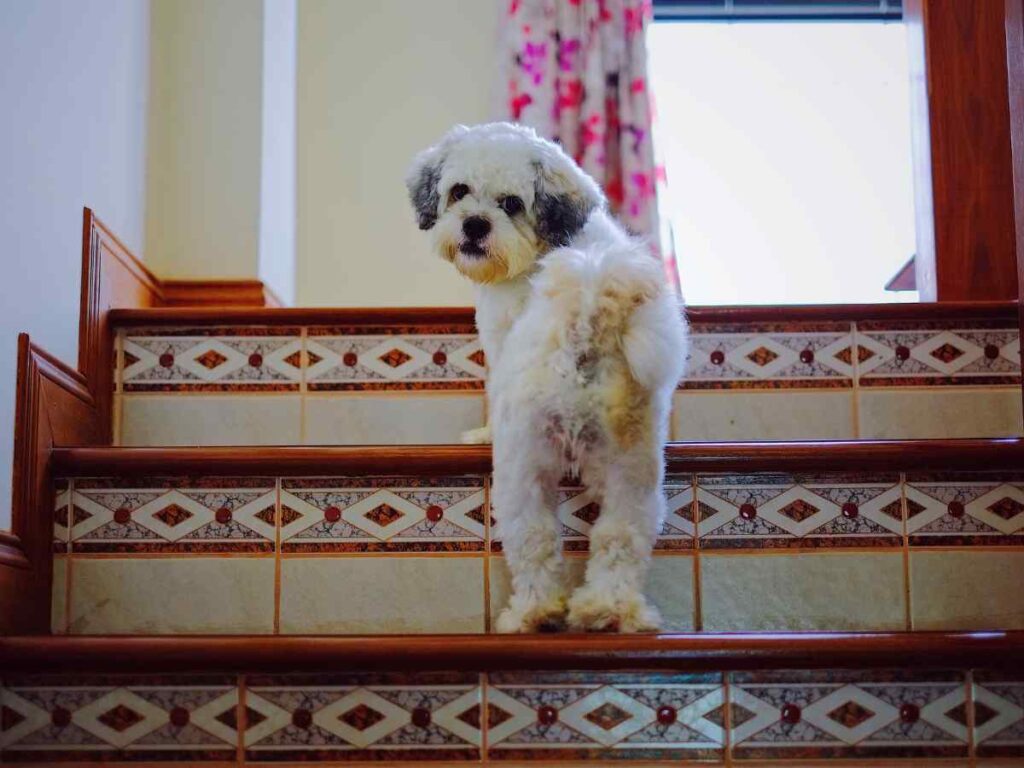
Helping a Dog Go Upstairs Without Hurting Them
People often grab the collar and pull upward. I understand the instinct, but it creates awkward pressure on the neck and throws the dog off balance. I prefer using a rear support harness or placing one arm under the abdomen near the hips while keeping the dog moving at a steady pace. Slow is usually safer than stopping every step.
Some dogs need rhythm. I worked with an elderly Saint Bernard that froze if the owner paused halfway up. Once we established a smooth climb with short verbal cues, he handled the staircase much better. We kept the sessions short and avoided repeated practice runs that exhausted him.
Weight matters a lot here. Assisting a 15-pound dog is manageable for most people, but supporting an 85-pound dog on stairs can injure the owner, too. I have seen shoulder strains and one bad ankle twist from owners trying to dead-lift their dogs upstairs without help. If the dog is very large, I usually recommend a second person during the early adjustment period.
Never rush the first few attempts. Dogs remember bad stair experiences for a long time. One hard slip can create hesitation that lasts months, even after the physical issue improves.
Getting an Old Dog Down the Stairs Safely
Going down is often harder than going up. The front legs absorb more force during descent, and dogs with arthritis in the shoulders or elbows tend to brace awkwardly. I can usually tell which direction hurts more by watching where the hesitation happens. Downward hesitation tends to look more cautious and stiff.
I stay slightly below the dog whenever possible. That position lets me guide the chest and slow momentum without dragging the dog backward. Small dogs sometimes benefit from being carried down the stairs if the staircase is narrow or steep, though I still support the spine carefully rather than scooping them loosely like laundry.
Some staircases are simply terrible for senior dogs. Tight turns, uneven riser heights, and glossy surfaces create problems no supplement can fix. I remember a narrow split-level staircase that forced an old Husky mix into awkward sideways steps. The owners eventually blocked the stairs entirely and moved sleeping arrangements to the first floor.
There is no shame in changing the house setup. I say that often. People sometimes feel guilty because the dog can no longer access a favorite room upstairs, but forcing the dog to use difficult stairs every day can create chronic pain and unnecessary stress.
Knowing When Stairs Should Be Avoided Entirely
Some dogs reach a point where stairs become unrealistic. Severe arthritis, degenerative myelopathy, neurological disease, or repeated collapsing episodes change the equation completely. I have met owners who kept pushing daily stair use because they hoped the dog would “stay strong,” but exhaustion and fear usually outweighed any benefit.
Watch for warning signs. Knuckling paws, crossing rear legs, sudden sitting during climbs, or heavy panting after just a few steps tell me the dog is struggling harder than it appears. Dogs hide discomfort well. Older dogs especially do this.
At that stage, I focus more on preserving confidence and comfort than maintaining access to every part of the home. Baby gates, temporary ramps, relocated food bowls, and ground-floor sleeping spaces often reduce stress immediately. One family moved their mattress downstairs for a few months because their senior Mastiff panicked every evening at bedtime. The dog relaxed almost overnight.
Veterinary input matters too. I am careful not to treat every mobility issue as ordinary aging, because I have seen dogs improve dramatically after changes in pain management or adjustments in physical therapy. Some conditions progress slowly. Others change within weeks.
I always tell owners to pay attention to the dog’s attitude around the stairs, not just the mechanics. A dog that approaches calmly but moves slowly is very different from a dog that trembles at the first step. Once fear becomes part of the routine, the staircase stops being just a physical obstacle. It becomes a daily source of stress for both the dog and the owner.