
A Perspective from an Automotive Detailer
I’ve been working as an automotive detailer and odor-removal specialist for more than a decade, and the “cat pee smell” complaint is one of the most stubborn—and misunderstood. People usually assume an animal actually climbed in and had an accident. Sometimes that’s true, but more often, the smell is coming from something else entirely, and it can linger long after you think the problem is gone.
I’ll walk through what I see most often in real vehicles I work on, what usually causes that sharp ammonia-like odor, and what I would personally do if it were my own car.
The smell isn’t your imagination — and it’s not always from a cat.
That harsh, acrid smell people describe as cat urine usually points to one of three things in my experience: biological contamination, mold and moisture problems, or chemical breakdown from the car itself.
The first time I encountered this early in my career, a customer swore the neighbor’s cat was sneaking into his car at night. The seats smelled terrible, especially after sitting in the sun. After removing the back seat cushion, we found that a milkshake had spilled months earlier, soaked into the foam, and fermented. No cat had ever been involved. As soon as the liquid was thoroughly cleaned out and the cushion replaced, the “cat pee” smell disappeared.
That experience taught me that odors travel and intensify with heat. If your car smells strongly only after it has been parked in the sun, trapped moisture or old spills are very likely suspects.
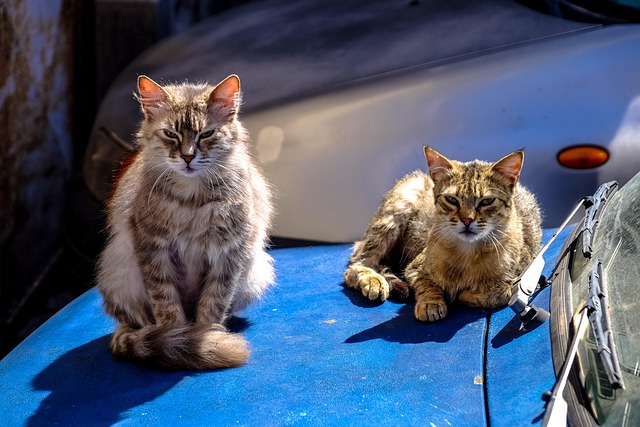
Real cat urine in cars does happen — and it’s brutal.
I’ve also seen the genuine thing. A customer brought me a compact SUV one summer after leaving the windows partially open in a garage. A neighborhood cat had wandered in and sprayed the rear cargo area. Cat spray is different from regular urine — it’s more concentrated, oily, and designed to mark territory. That’s why the smell is so strong and so persistent.
Here’s the part most people underestimate: porous materials like seat foam and carpet padding don’t just “hold” odor, they bond with it. Wiping the surface won’t remove it. In that SUV, we had to remove the cargo trim and replace the soaked insulation altogether. Anything less would have left the smell behind.
So if you know there has been actual animal spray in the car, and the odor is strong and localized, deep cleaning or partial material replacement is usually the realistic solution. Scent sprays won’t win that battle.
Mold and moisture problems often smell similar to cat urine.
One of the more deceptive sources is hidden moisture. I’ve seen it many times after windshield replacements, clogged sunroof drains, or leaky door seals. Moisture gets trapped under the carpet, the padding absorbs it like a sponge, and before long, you’ve got microbial growth that can smell sharp, sour, and ammonia-like.
A case that sticks with me was a sedan that only smelled after rain. The owner had tried hanging multiple air fresheners and using baking soda, but couldn’t get rid of it. We pulled the carpet and found the passenger floor insulation soaked. A plugged AC evaporator drain was backing water into the cabin. Once the drain was cleared and the padding replaced, the “cat pee smell” vanished.
If your windows fog excessively, floors feel damp, or the smell is worse after rain, I’d strongly suspect moisture rather than animals.
HVAC systems can be the hidden culprit
Another common source is the heating and air conditioning system. If I get a car where the odor kicks in when the AC first turns on, I usually look straight at the evaporator and cabin filter area. Moisture sits in the evaporator housing, bacteria and mold grow, and the resulting odor can resemble cat urine or strong ammonia.
A practical detail: drivers who constantly use recirculate mode tend to experience this more, because less fresh air dries the system. I’ve seen plenty of cars improve almost overnight after the owner changed the cabin filter and stopped leaving the recirculate on permanently.
Chemical causes: old antifreeze, cleaners, and adhesives
Not all “cat pee” smells are biological. Certain chemicals that age or leak in a car can smell surprisingly similar.
Older antifreeze, especially when it leaks onto hot engine parts and vaporizes, can create a sweet but harsh odor that some people mistake for cat urine. I had a customer last spring who complained of odor only after long drives. Turned out there was a tiny coolant leak onto the exhaust manifold. No interior cleaning would ever have solved that.
I’ve also traced smells to cheap aftermarket floor mats, adhesive under new carpet, and even an upholstery cleaner that wasn’t thoroughly rinsed out. Once the chemical residue had baked in the sun for a few weeks, the smell turned unmistakably unpleasant.
What I personally recommend doing first
I don’t usually start with deodorizing sprays. They only cover symptoms and make the car smell like “cat pee plus something floral.”
Here’s the order I follow in my own shop, and at home in my own vehicles:
- Find the source, don’t fight the smell.
- Lift floor mats. Check under the seats. Feel the carpet padding for dampness. Smell the seat belt webbing — it often absorbs spills people miss.
- Rule out coolant or other leaks.
- If there’s a sweet or ammonia-like odor from outside the car or under the hood after driving, a mechanic should pressure-test the cooling system.
- Check for water intrusion.
- Wet floorboards, clogged sunroof drains, or an AC drain issue are extremely common and won’t fix themselves.
- Only then, clean deeply.
- Surface wiping rarely solves cat-pee-type odors. Extraction cleaning, replacing padding, or targeted enzyme-based cleaners are what typically work.
Common mistakes I see car owners make
I’ve watched lots of people make the same well-intentioned mistakes:
They sprinkle carpet powder everywhere and grind it into the fabric, which later cakes up and traps even more moisture.
They steam-clean seats without thoroughly drying them. Steam feels “clean,” but trapped moisture under foam cushions is almost guaranteed to create new odors.
I’ve even had customers try to ozone-shock a car repeatedly without removing the actual source material. Ozone has its place, but it doesn’t magically erase soaked-in urine or moldy padding.
When it makes sense to stop DIY-ing it
If the smell is strong enough to make you feel nauseous, or you can clearly trace it to cat spray, soaked padding, or coolant leaks, I’d suggest professional help sooner rather than later. I say that less as a sales pitch and more as someone who has seen seats destroyed by home remedies like bleach solutions or random chemical mixes found online.
Sometimes the honest answer is that replacing a cushion or insulation layer is cheaper and faster than chasing the odor for months.
A car that smells like cat pee isn’t just annoying — it’s usually your car trying to tell you that something is spilling, leaking, soaking, or growing where it shouldn’t. In my experience, once the actual source is located and dealt with properly, the smell doesn’t mysteriously “come back.” It only lingers when it was never truly removed in the first place.
Trust your nose, investigate, and don’t just cover it up.