
Many pet owners wonder whether common human foods are safe for cats, especially ingredients like corn that appear harmless and are sometimes listed on pet food labels. Corn is widely used in commercial pet foods, which can create confusion about whether it is appropriate—or beneficial—for cats to eat at home. Understanding how a cat’s digestive system works helps clarify where corn fits, and where it does not.
How a Cat’s Digestive System Works
Cats are obligate carnivores. This means their bodies are biologically designed to rely on animal-based nutrients, particularly protein and fat, to meet their daily needs. Their digestive systems are efficient at breaking down meat, but far less equipped to process plant matter.
Unlike omnivores, cats produce only limited amounts of enzymes needed to digest carbohydrates and fiber from plants. As a result, foods like corn are often broken down poorly or pass through the digestive tract with minimal nutrient absorption.
This does not make corn poisonous, but it does limit its usefulness in a feline diet.
Is Corn Safe for Cats?
Corn is not toxic to cats. Small amounts of plain, cooked corn are generally tolerated by healthy cats without serious harm. However, tolerance is not the same as nutritional value.
Because cats cannot efficiently digest corn, they gain little benefit from it. In some cases, corn may pass through the digestive system largely unchanged. For cats with sensitive stomachs, even small portions can lead to digestive discomfort.
Corn should never be treated as a dietary staple or meaningful source of nutrition for cats.
Why Corn Can Cause Digestive Issues
Digestive problems related to corn occur because of how it interacts with a cat’s physiology. Common issues include:
-
Incomplete digestion: Whole kernels are often swallowed without sufficient chewing and may pass through intact.
-
Gas and bloating: Fermentation of undigested carbohydrates can cause discomfort.
-
Loose stools: Some cats experience mild diarrhea or soft stools after consuming corn.
-
Stomach sensitivity reactions: Cats with pre-existing digestive conditions may react more strongly.
These effects are usually dose-dependent, meaning the more corn consumed, the higher the likelihood of symptoms.
Corn in Commercial Cat Food vs. Corn at Home
Many pet owners assume that because corn appears in commercial cat food, it must be safe to feed directly. This is a common misunderstanding.
In commercial diets, corn is typically:
-
Finely ground or processed
-
Heat-treated to improve digestibility
-
Included in controlled amounts
-
Balanced with essential animal proteins and nutrients
Whole corn kernels, popcorn, or table scraps do not undergo this processing. They are harder for cats to digest and more likely to cause gastrointestinal upset.
The presence of corn in pet food does not mean cats require it, nor does it mean household corn is an equivalent substitute.
Situations Where Corn Poses Greater Risk
While healthy adult cats may tolerate small amounts, corn can be more problematic in certain situations:
-
Kittens, whose digestive systems are still developing
-
Senior cats, who may have reduced digestive efficiency
-
Cats with sensitive stomachs
-
Cats with diabetes or metabolic conditions, where carbohydrates can interfere with blood sugar regulation
-
Cats prone to food intolerances
In these cases, even minor dietary changes can lead to noticeable health effects.
Common Owner Mistakes
Well-meaning owners often make decisions based on assumptions rather than biology. Common mistakes include:
-
Treating corn as a harmless snack because it is a vegetable
-
Feeding corn frequently instead of occasionally
-
Offering buttered, salted, or seasoned corn
-
Giving popcorn or corn on the cob
-
Using corn as a fiber supplement without veterinary guidance
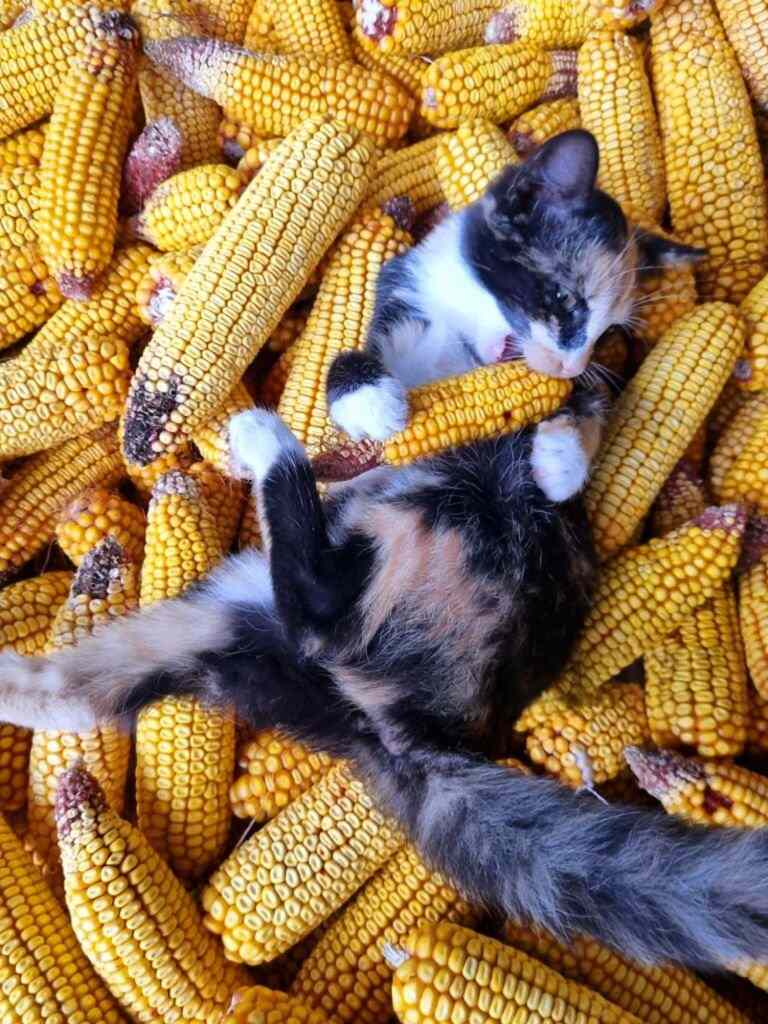
Corn on the cob is particularly dangerous, as it poses a choking hazard and can cause intestinal blockages if swallowed.
Does Corn Provide Any Benefits?
Corn contains carbohydrates and small amounts of fiber, but these nutrients are not essential for cats. Cats meet their fiber needs more effectively through specialized formulations in balanced cat food, not through human food scraps.
Protein-rich animal sources remain far superior for supporting muscle health, energy, immune function, and overall wellbeing.
The Most Responsible Choice for Pet Owners
From a safety and nutrition standpoint, the most responsible approach is to keep a cat’s diet centered on foods formulated specifically for feline needs. Treats and human foods should remain occasional and carefully chosen.
If corn is offered at all, it should be:
-
Plain
-
Fully cooked
-
Free of butter, salt, oils, or seasoning
-
Given in very small amounts
-
Treated as an infrequent exposure, not a routine food
Observing how a cat responds after eating unfamiliar foods is essential. Any signs of digestive upset should prompt discontinuation.
A Practical Takeaway
Cats can tolerate small amounts of corn, but they are not equipped to digest it efficiently or benefit from it nutritionally. Corn is unnecessary in a cat’s diet and can cause digestive discomfort, especially when fed whole or in excess.
Choosing food that aligns with a cat’s natural biology supports long-term health and reduces avoidable risks. Thoughtful feeding decisions, grounded in understanding rather than assumption, remain one of the most effective ways to protect feline wellbeing.