
I’m a small-animal veterinarian who has spent many hours listening to distressed cats from the driver’s seat of mobile clinics and from the treatment rooms where anxious owners arrive pale and apologetic. Cars and cats rarely mix gracefully. Engines vibrate, smells are unfamiliar, carriers feel confining, and the whole experience is louder and brighter than most cats tolerate.
Over the years, I’ve helped hundreds of cats travel with far less drama than their first ride suggested. Some of these ideas come from textbooks, but most come from sitting with owners afterward and saying, “Tell me exactly what happened,” then fixing it piece by piece.
Start long before you turn the ignition on.
The single biggest mistake I see is this: the first time a cat meets the carrier is the moment they’re shoved into it while the clock is ticking. That usually guarantees a struggle.
What works better is letting the carrier live in the house as furniture. Leave it open, soft bedding inside, maybe a treat tossed in occasionally. I’ve watched cats who once howled like sirens nap voluntarily in carriers after a few weeks of this.
A client last spring brought me a young tabby who had shredded two cardboard carriers on the way to the clinic in previous visits. They took my advice and turned the hard-sided carrier into a “permanent cave” in the living room. On the next trip, the same cat walked inside on his own, and the ride was quiet aside from a few offended grumbles. Nothing else about that cat changed — the familiarity of the carrier did.
If your cat already hates the carrier, don’t force marathon training sessions. Just start with tiny steps: open the carrier, reward nearby, then reward for paw inside, then body inside. Progress in days or weeks is satisfactory. Pushing too fast resets all the gains.
The carrier itself matters more than people expect
I’ve seen owners use open boxes, laundry baskets, and even wrapped towels. Those usually lead to panic and escape attempts that scare everyone in the car. Use a secure carrier, ideally with:
- A solid base and a top that can be removed or opened
- Enough room to turn around, but not so large that the cat slides during braking
- Ventilation without being a visual “fishbowl.”
Covered carriers calm many cats. I often recommend draping a light towel over three sides so the cat has visual shelter but still gets airflow. One nervous senior cat I treated did far better when the owner added a worn T-shirt to the carrier — the familiar scent anchored her more than any verbal reassurance.
If a cat urinates or drools from stress, don’t be discouraged. That’s not misbehavior. It’s fear. Add absorbent bedding or puppy pads inside, not bare plastic.
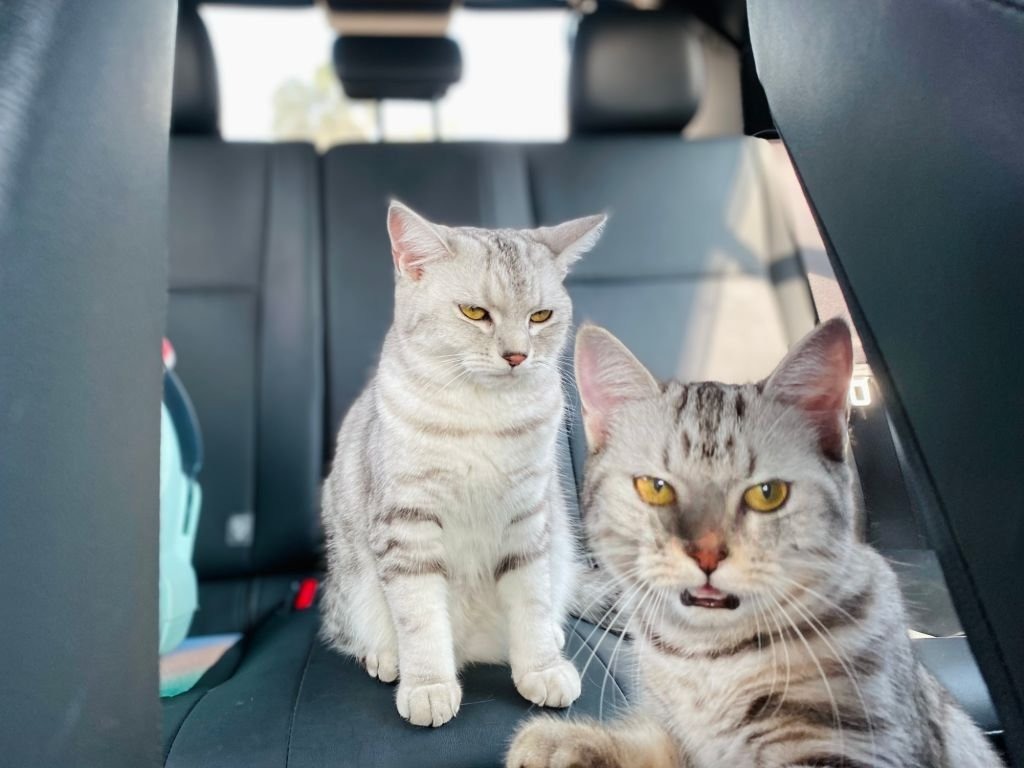
The car environment should be boring, not stimulating.
People try to soothe cats with loud music or nonstop talking. Most cats don’t find that comforting; they prefer predictability and quiet.
I recommend loading the cat into the carrier indoors, fastening it so it cannot tip (the rear footwell or a seatbelt works well), then starting the car and letting the engine idle for a minute before driving. Smooth acceleration and gentle braking matter. Cats feel those shifts far more strongly than we do.
A practical tip from years of mobile farm calls: air-conditioning vents aimed directly at the carrier often make cats more unsettled. They crouch, eyes wide, as cold air blows through the grates. Adjust the vents upward or to the side so the interior stays comfortable without drafts blasting through the carrier.
Avoid opening the carrier mid-ride, even if the meowing tugs at you. I’ve examined cats who escaped under pedals or up into dashboards; it only takes a second.
Your own body language affects the cat more than you think.
Owners are often already worried about the vet visit or the long trip ahead. That tension spreads. Cats read our hands and voices very well.
I’ve had appointments where the cat sat quietly until the owner leaned over the carrier and whispered rapidly in a high, anxious tone. The cat’s eyes widened, and the panic began. Speaking slowly, moving at a usual pace, and treating the trip as routine help more than you might expect.
Have one person drive, and have the other remain calm and still. Constant reaching into the carrier, poking fingers through the door, or shaking treats in front of a terrified cat usually backfires.
Some cats benefit from pheromones or medication.
This is where my veterinarian hat is most apparent. Not every cat needs medication, but some do, and there is no moral victory in forcing a highly anxious animal to “tough it out.”
I’ve seen remarkable improvements with pheromone sprays used on the carrier bedding about 10–15 minutes before loading. They don’t sedate; they lower the emotional temperature a notch. They aren’t magic, but for a portion of cats, they make the difference between nonstop howling and occasional protest.
For cats who hyperventilate, vomit, or injure themselves trying to escape, I often prescribe anti-anxiety medication for travel. A family with a rescued semi-feral cat once told me they dreaded visits so much that they delayed needed care. After we trialed medication at home first (never the first time on the road), their cat traveled quietly enough that everyone arrived with steady heart rates.
If you think your cat falls into this group, talk to your veterinarian beforehand. Don’t experiment with over-the-counter human products or old prescriptions from other pets. I’ve treated cats made dangerously ill by well-meant guesses.
Food, timing, and bathroom logistics
Another common question I get: “Should my cat eat before the trip?” For short drives across town, it usually doesn’t matter. For longer trips, a light meal several hours beforehand can reduce vomiting. Full bowls right before departure tend to end up back on the bedding.
I don’t recommend loose litter boxes in carriers for travel; they spill and create more mess than they relieve. Instead, plan breaks where you can safely offer a box in a contained room once you reach a stopping point. Many cats will hold urine for several hours during travel and use the box once settled.
Water isn’t typically necessary for short rides, but for multihour trips, offer small amounts during stops. Don’t open the carrier outdoors or in unfamiliar hallways — frightened cats can bolt through tiny gaps. I’ve helped search for runaways in clinic parking lots; those stories rarely have easy endings.
Expect vocalizing — and judge the situation by behavior, not sound.
Some of the loudest cats I’ve met were not the most stressed. They had opinions. Others made almost no noise yet were rigid, drooling, and wide-eyed. Watch for body signs: rapid breathing, open-mouth panting, continuous attempts to claw out, or collapse. Those warrant stopping at a safe place and calling your veterinarian for advice.
A particularly memorable case involved a large orange cat whose meows sounded like human words. His owner apologized, laughing in embarrassment, the entire drive to the clinic, while using speakerphone with me, convinced he was traumatized. On the exam, he was relaxed, rubbing his face on my hands. He was just talkative. Contrast that with a smaller, silent cat who arrived soaked in saliva and unable to stand steadily — that one needed immediate calming medication and oxygen support. Noise alone doesn’t tell the whole story.
What I encourage — and what I gently discourage
I strongly encourage:
- Carrier familiarity at home, not only on travel days
- Slow, steady driving and secure placement of the carrier
- Covering the carrier partially to reduce visual overload
I discourage:
- Letting cats loose in the car, even “just for a minute.”
- Sedating without veterinary guidance
- Punishing vocalizing or fearful behavior
Fear is not stubbornness. It’s a survival instinct that happens to misfire in cars.
Sometimes the goal isn’t silence — it’s manageable stress.
Owners often ask how to make their cat love car rides. A few cats eventually do; many never will. My professional goal isn’t creating feline road-trip enthusiasts. It’s reducing stress enough that travel is safe, predictable, and non-traumatic for both of you.
If you can get your cat into a familiar carrier without wrestling, drive without frantic scrambling or panting, and arrive with a cat who recovers within an hour or two, you’re succeeding.
I’ve seen families go from “we can’t bring him anywhere” to routine visits by making a handful of adjustments rather than chasing perfection.
Your cat may never serenely gaze out the window like a dog with its head in the breeze. That’s fine. Calm, secure, and able to tolerate the trip is a win.