
As a licensed veterinarian practicing in Texas for over a decade, I’ve had countless conversations about what owners call “tortitude.” Tortoiseshell cats have a reputation: bold, moody, fiercely independent, sometimes downright bossy.
After treating hundreds of them over the years, I can tell you this — tortie cat behavior is real in the sense that patterns exist, but it’s often misunderstood. Much of what people attribute to coat color is actually personality amplified by environment, early socialization, and owner response.
Still, I’ve learned to brace myself a little when I see that mottled black-and-orange coat walk into an exam room.

The “Tortitude” Reputation — Is It Accurate?
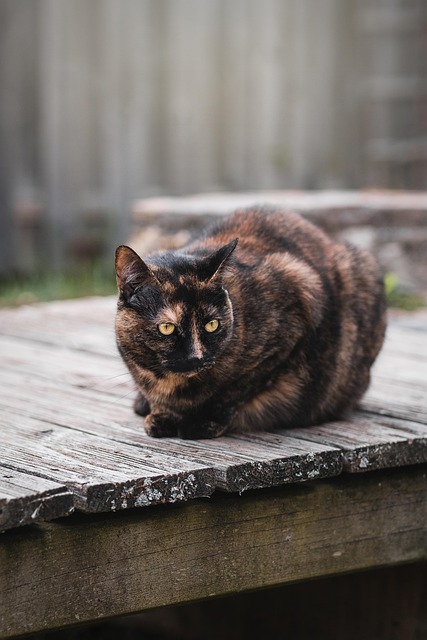
Tortoiseshell isn’t a breed. It’s a coat pattern caused by specific genetic combinations, usually in female cats. Because the vast majority are female, hormones and social behavior patterns play a role in how they’re perceived.
In my experience, torties tend to be:
- Highly opinionated
- Quick to react
- Intensely bonded to one person.
- Less tolerant of handling, they didn’t initiate
That doesn’t mean aggressive. It means expressive.
A few years ago, a client brought in her tortie for what she described as “random attacks.” The cat would sit calmly on the couch, then suddenly swat at her husband’s ankle when he walked past. After watching the cat in the exam room, I noticed she was hyper-alert to movement and noise. The husband moved quickly and heavily; the wife moved slowly and spoke softly. The cat never “randomly attacked” the wife.
This wasn’t unpredictability. It was stimulus sensitivity.
Once we coached the husband to slow down, avoid looming movements, and redirect with toys, the ankle swatting stopped.
That pattern — high reactivity combined with strong attachment — is something I see often in torties.
Strong Bonds, Selective Loyalty
One of the most striking aspects of tortie cat behavior is their tendency to choose their person.
I remember a household with three adults and two children. The tortie ignored everyone except the grandmother. She slept in her room, followed her into the kitchen, and even waited outside the bathroom door. If anyone else tried to pick her up, she stiffened and wriggled free.
The family assumed the cat was antisocial. She wasn’t. She was selective.
In clinic settings, torties often tolerate me if their chosen human is present and calm. If that person is anxious, the cat escalates quickly. I’ve learned to coach the owner first, because calming the human often calms the tortie.
This intensity can be wonderful. Torties often form deeply devoted bonds. But I caution families with very young children that these cats may not tolerate rough or unpredictable handling.
Vocal and Opinionated
Many tortie owners describe their cats as “talkative.” Not all are, but when they are, they’re persistent.
One client last spring brought in her tortie because she was “yowling constantly.” After ruling out medical issues like hyperthyroidism or pain, it became clear the cat had trained the household. Every time she vocalized near the pantry, someone offered food.
Torties are intelligent and quick to identify cause-and-effect patterns. Once they realize a behavior works, they repeat it with enthusiasm.
In cases like this, I advise consistency. If you give in sometimes but not always, the behavior intensifies. That intermittent reinforcement is powerful. Owners who commit to structured feeding times and ignore attention-seeking vocalization usually see improvement within weeks.
Sensitivity to Handling
This is where torties can surprise people.
I’ve noticed that many torties have a lower tolerance threshold for prolonged petting. They may solicit attention — head-butting, purring, kneading — and then suddenly swat or nip.
That shift often happens because owners miss subtle cues:
- Tail twitching
- Skin rippling along the back.
- Ears rotating sideways
- Slight muscle tension
In one exam, a tortie who had been purring in my arms suddenly twisted and swatted. I reviewed the interaction in my mind afterward and realized I had continued stroking past the point she’d subtly stiffened.
Now, especially with torties, I use shorter petting intervals and pause frequently. Most do beautifully when you respect their thresholds.
Owners who learn this body language often tell me their “moody” cat becomes much more predictable.
Are Torties More Aggressive?
In my professional opinion, they’re not inherently more aggressive. They’re often more assertive and less inhibited about expressing discomfort.
There’s a difference.
A timid cat may tolerate stress quietly. A tortie is more likely to say, “I don’t like this,” clearly and immediately.
From a veterinary standpoint, I actually appreciate that clarity. It allows us to adjust handling quickly instead of pushing a fearful cat too far.
However, problems arise when owners punish this communication. Spraying with water, yelling, or tapping the nose can escalate defensiveness. I’ve seen several torties become genuinely reactive after months of being “disciplined” for warning swats.
Behaviorally, that’s predictable. If warning signals are ignored or punished, the cat may skip them next time.
Torties and Environmental Enrichment
Because many torties are alert and high-energy, boredom can magnify behavioral issues.
A few years ago, I worked with a tortie who began attacking her owner’s feet at night. Medical causes were ruled out. The cat lived in a small apartment with minimal stimulation. No climbing spaces. No scheduled play.
We introduced:
- Twice-daily interactive wand toy sessions
- Vertical shelves near windows
- Puzzle feeders instead of free-feeding
Within a month, the nighttime attacks decreased dramatically.
High-drive personalities need outlets. In my experience, torties often fall into that category. They thrive when given structure and mental engagement.
The Hormonal Factor
Because tortoiseshell cats are overwhelmingly female, intact torties can be particularly intense during heat cycles.
I’ve had clients describe dramatic shifts: rolling, yowling, attempting to escape outdoors. After spaying, many of these behaviors calm significantly.
While spaying won’t change a cat’s core personality, it often reduces hormonally driven irritability and restlessness. I generally recommend spaying not just for population control and health benefits, but because it stabilizes behavioral swings in many females, including torties.
Common Owner Mistakes I See
After years in practice, a few patterns stand out.
First, assuming personality equals defiance. Cats don’t act out of spite. When a tortie swats, vocalizes, or avoids contact, there’s a trigger.
Second, inconsistent boundaries. If you allow rough play sometimes but scold it other times, the cat becomes confused. Torties, being quick learners, respond best to clear, consistent rules.
Third, underestimating their need for control. Forcing interaction — holding them when they’re trying to leave, or unnecessarily restraining them — often backfires. Giving them choices builds trust.
Living Happily With a Tortie
Despite their reputation, many of my favorite long-term patients have been torties. They’re expressive. They’re engaged. They’re rarely dull.
Owners who succeed with torties tend to:
- Respect body language
- Provide mental stimulation
- Maintain predictable routines
- Avoid punishment-based corrections
If you prefer a laid-back, universally social cat who tolerates anything, a tortie may challenge you. But if you appreciate a cat with presence and personality, they can be deeply rewarding companions.
After all these years in exam rooms with mottled coats glaring up at me, I don’t see “attitude.” I see intensity, intelligence, and a cat who expects to be heard.