
From Concept to Creation
I’ve been working as a small-animal rehabilitation specialist for over a decade, and I’ve lost count of how many mobility aids I’ve either built or modified in the clinic. Most people assume dog wheelchairs are only for the back legs. In reality, front-leg support carts are far trickier—and far more rewarding when done right.
The first time I made a front-leg cart was for a dog with a nerve injury. We improvised using hardware store parts, and when he could move again, it showed how important a working design is.
This isn’t about building something perfect. It’s about building something safe, functional, and comfortable enough that your dog actually wants to use it.
Understanding What Makes Front-Leg Wheelchairs Different
Most DIY guides online focus on rear-wheel carts. Front-leg wheelchairs flip the entire balance of the dog’s body. Instead of supporting the back, you’re stabilizing the chest and shoulders while the hind legs do all the work.
In my experience, the biggest mistake people make is underestimating how much weight the front end carries. If your frame is flimsy or the harness placement is off by even a couple of centimeters, the dog may tip forward or develop painful pressure points.
A client once brought in a cart that hung by the dog’s throat, making it uncomfortable and unsafe. The dog wouldn’t move.
The Basic Design That Works
After building and adjusting dozens of these, I’ve settled on a simple principle: keep it light, keep it stable, and support the chest—not the neck.
At its core, a front-leg wheelchair needs:
- A lightweight frame (usually PVC pipes or aluminum tubing)
- Two rear wheels are positioned near the hips.
- A padded chest sling or harness
- Adjustable height to match the dog’s natural posture
I usually recommend PVC for first-time builds. It’s forgiving. You can cut, redo, and tweak angles without specialized tools.
How I Built One Step by Step
I’ll walk you through the exact approach I’ve used with pet owners in real situations.
Step 1: Measure Your Dog Properly
This is where most DIY builds go wrong.
You need three key measurements:
- Ground to chest (while the dog is standing or supported naturally)
- Length from the chest to just before the hind legs
- Width across the chest
Once, an owner guessed measurements, and the resulting cart forced the dog into an awkward arch. Correcting the height improved movement immediately.
Take your time here. Get it right.
Step 2: Build the Frame
Using PVC pipes:
- Create a rectangular base that runs along the dog’s sides.
- Add vertical supports that reach up to chest level.
- Connect everything securely with elbow and T-joints
Leave some extra pipe length for later trimming adjustments.
Ensure the frame feels sturdy but not heavy for your dog.
Step 3: Attach the Wheels
Mount wheels just behind your dog’s center of gravity, near the hips.
This positioning is critical.
Position them too far back and movement suffers; too far forward, and balance is lost.
I learned this the hard way with a young Labrador who kept face-planting during early trials. Moving the wheels back by just a small margin completely changed the balance.
You can use:
- Stroller wheels
- Bicycle training wheels
- Small cart wheels
Secure them to the PVC frame with metal rods or threaded axles.
Step 4: Create the Chest Support
This is the heart of the design.
Use a wide, soft material—something like:
- Neoprene
- Thick fabric with padding
- Even a repurposed harness
The sling should sit under the chest, behind the front legs—not around the neck.
I once modified a cart the owner used that had a narrow strap. Within minutes, the dog developed redness under the chest. Switching to a broader, padded sling solved the issue immediately.
Comfort here determines whether your dog will accept the wheelchair.
Step 5: Adjust Height and Alignment
When the dog is in the cart:
- The spine should be level.
- The hind legs should naturally touch the ground.
- The chest should be supported without sagging.
If the front is too high, the dog strains backward. Too low, and they drag.
I usually spend more time adjusting height than building the frame itself. It’s that important.
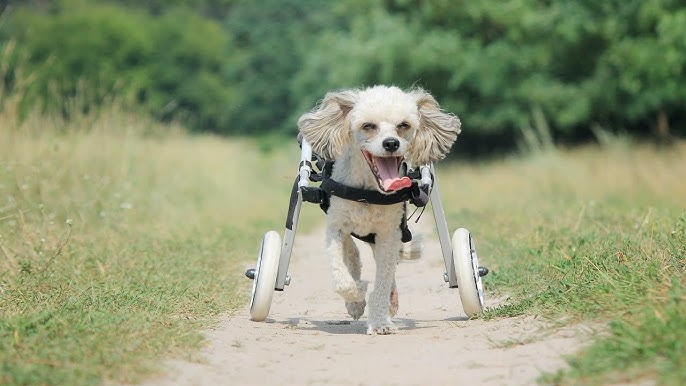
What I Tell Owners Before First Use
The first session is never perfect.
Some dogs freeze. Some try to back out. A few take off immediately as if nothing happened.
A terrier needed time to adjust, but eventually started moving and adapting quickly.
Start slow. Let your dog get used to the sensation.
Mistakes I See Again and Again
Over the years, a few patterns have shown up:
People often build carts that are too heavy. If you struggle to lift it easily, your dog will struggle to use it.
Another common issue is poor padding. Pressure sores can develop faster than most expect, especially around the chest and underarms.
And then there’s impatience. Owners expect instant success. In reality, it can take a few days—or even weeks—for a dog to adapt.
When DIY Isn’t the Right Choice
I’m a big supporter of DIY solutions, especially for accessibility. But there are cases where I advise against it.
If your dog has severe spinal instability, pain, or a complex neurological condition, a custom-built professional cart is often safer.
A homemade device sometimes made things worse when specific support was needed. A professional cart made all the difference in those cases.
Final Thoughts From My Experience
Building a front-leg wheelchair isn’t just a mechanical project. It’s a process of understanding how your dog moves, what they tolerate, and how small adjustments can make a huge difference.
The best designs I’ve seen weren’t the most expensive or the most polished. They were the ones where the owner paid attention—watched how their dog responded, made tweaks, and stayed patient.
That’s what ultimately gets a dog moving again.