
The Art of the Scent-First Introduction
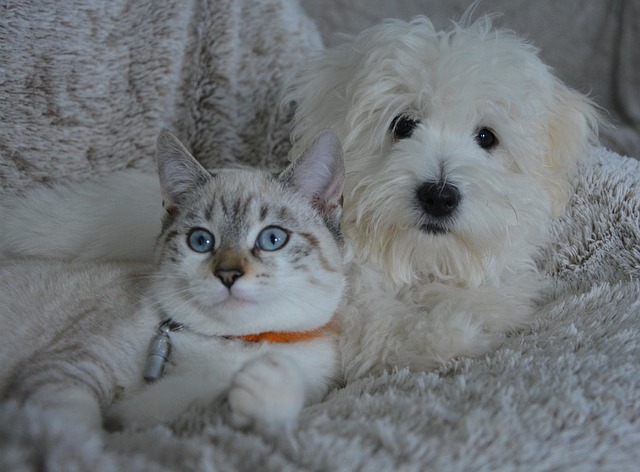
In my fifteen years as a professional animal behaviorist, I have stood in many kitchens, watching tense stand-offs between a confused Golden Retriever and a terrified Calico. The most common mistake I see isn’t a lack of love for the animals; it’s a rush for the “Disney moment.” People want that photo of the dog and cat curled up together on day one. In reality, forcing that connection is the fastest way to ensure it never happens.
I remember working with a family last autumn who had just adopted a high-energy Husky mix. They tried to introduce him to their resident senior cat by simply holding the cat and letting the dog sniff her. The dog jumped, the cat swiped, and for the next three months, that cat lived exclusively on top of the refrigerator.
We had to spend weeks undoing that five-second trauma. My professional opinion is that the first “meeting” shouldn’t involve the animals seeing each other at all.
The Power of the Scent Swap
Animals live in a world of olfaction that we can barely perceive. Before any visual contact occurs, I advise clients to engage in scent swapping. Take a sock or a small towel, rub it on the dog, and place it near the cat’s food bowl. Do the same for the dog with the cat’s scent.
This creates a positive association: “This new smell means good things are happening.” If the dog starts obsessively whining or pawing at the door where the cat is kept, I know we aren’t ready to move forward. You are looking for calm curiosity, not intense fixation.
Managing the Physical Space
One detail that often gets overlooked is the “escape route.” I’ve seen many well-meaning owners trap a cat in a corner during an introduction, thinking they are helping by keeping the cat still. This is a recipe for a fight-or-flight response.
A cat needs to feel like they have the high ground. Before I ever allow a dog into a shared space, I make sure there are vertical options—cat trees, cleared-off bookshelves, or wall-mounted perches. A cat that can look down on a dog feels significantly more secure than one staring at a set of teeth from floor level.
I once consulted for a couple in a small apartment who were struggling with a territorial Terrier. We installed a simple baby gate with a small “cat door” cut into it. This allowed the cat to move freely between rooms while the dog remained restricted. It shifted the power dynamic instantly. The cat realized she held the keys to the interaction, which lowered her stress levels enough to finally stop hissing whenever the dog walked by.
The First Visual Contact
When it is finally time for them to see each other, the dog must be on a leash. I cannot stress this enough. Even the most “cat-friendly” dog can be triggered into a chase by a sudden feline dash.
During these first few sessions, I don’t look for the animals to interact. I’m looking for them to ignore each other. I’ll have the owner sit on the sofa with the dog on a short lead, offering treats for calm behavior, while the cat explores the room at a distance. If the dog fixates—staring intently without blinking or stiffening—the session is over.
I worked with a Boxer mix a few years ago that had a very high prey drive. We spent several sessions just teaching him to look at the cat and then immediately look back at the owner for a reward. We were essentially rewiring his brain to see the cat as a “cue” to check in with his human, rather than a toy to be chased.
Signs of Progress and Red Flags
You’ll know you’re winning when the “newness” wears off. When the dog lies down and sighs while the cat walks past, or the cat grooms itself in the dog’s presence, you’ve reached the goal.
However, be honest about the animals’ personalities. Not every dog and cat will be best friends. Sometimes, “peaceful coexistence” is the victory. If you see a dog constantly stalking the cat, or a cat that is prevented from using the litter box because the dog is guarding the hallway, you have a management issue that needs to be addressed immediately.
In extreme cases, usually involving dogs with a confirmed history of harming small animals, I have had to advise clients that a specific pairing may never be safe. It’s a hard conversation, but safety always outweighs the desire for a multi-pet household.
Patience is the only shortcut. If you think you’re going slow enough, go a little slower. It is much easier to prevent a fight than to repair a relationship after one has occurred.