
The sight of a dog with a tiny nub for a tail usually prompts a standard question from my clients: “Did they dock that, or was he born that way?” In my twenty years of clinical practice as a veterinarian, I’ve seen that many people are genuinely surprised to learn that a missing tail isn’t always the result of a surgeon’s scalpel.
Natural bobtails are a fascinating quirk of genetics that I encounter quite often in my exam room. While many breeds, like Boxers and Dobermans, typically undergo cosmetic docking shortly after birth, several breeds carry a specific mutation—the C189G mutation in the T-box gene—which causes them to be born with a naturally short or nonexistent tail.
The Genetic Reality
When a new puppy owner brings in an Australian Shepherd or a Brittany Spaniel with a short tail, the first thing I do is feel the tip of the vertebrae. A docked tail often has a slightly blunt, sometimes scarred end where the skin was sutured. A natural bobtail, however, usually feels tapered and smooth.
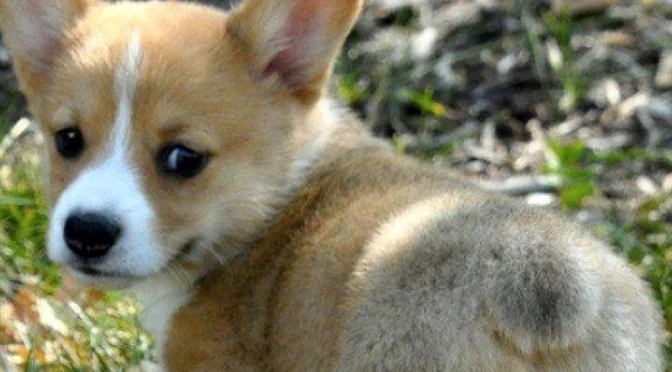
I remember a specific case last year with a Pembroke Welsh Corgi. The owner was adamant that the breeder had “lied” about the dog being natural, given that the tail was almost completely absent. After looking at the pup, I had to explain that the T-box gene is a dominant trait. If a dog inherits one copy of this gene, they’ll have a short tail. The length, however, is highly variable. I’ve seen littermates where one has a four-inch tail, and the other has nothing but a tiny “dimple.”
There is a significant caveat I always discuss with breeders regarding this gene. You cannot “breed up” to a shorter tail by mating two bobtails together. In my experience, breeding two natural bobs is a recipe for disaster; the homozygous condition (inheriting the gene from both parents) is typically lethal in the womb. Those puppies usually aren’t born at all, which results in smaller litter sizes and potentially spinal issues in the survivors.
Misidentifying the “Manx” Effect
People often conflate “no tail” with the Manx cat syndrome, but in dogs, the mechanics are different. While most natural bobtails are healthy, I have occasionally seen “screw tails” in breeds like French Bulldogs and Boston Terriers. These aren’t technically bobtails; they are a form of hemivertebrae, where the bones of the tail (and sometimes the spine) are misshapen.
I once treated a young English Bulldog that was struggling with recurrent skin infections. The owner didn’t realize that the dog’s “lack of a tail” was actually a tailbone that had curled back, creating a deep pocket that trapped moisture and bacteria. In those instances, what looks like a cute “born without a tail” trait is actually a structural deformity that requires surgical intervention to prevent chronic pain.
Advice for Potential Owners
If you are looking for a dog and prefer the look of a short tail but oppose docking for ethical reasons, I suggest looking into breeds where the trait is naturally occurring, such as:
- Australian Shepherds
- Brittany Spaniels
- Jack Russell Terriers (some lines)
- Pembroke Welsh Corgis
However, don’t take a seller’s word at face value. I’ve had more than one client pay a premium for a “natural” puppy only for me to find the tell-tale signs of a surgical procedure during the first wellness exam. If the breeder can’t show you genetic testing for the T-box mutation in the parent dogs, there is a high probability that the tail was removed manually.
From a medical perspective, a dog born without a tail generally leads a perfectly normal life. They still wiggle their entire hind end to show excitement—the “kidney bean” dance, as I call it—and they don’t seem to miss the extra appendage for balance. As long as the spine is straight and the “nub” is clean and healthy, a natural bobtail is just one of those unique expressions of canine diversity that makes my job interesting.