
Everything You Need To Know
I’ve spent the better part of a decade working with high-energy dogs—everything from anxious rescues to working breeds that could outthink their owners before breakfast. If there’s one thing I’ve learned, it’s this: most behavioral problems aren’t about disobedience. They’re about boredom.
Mental stimulation isn’t a “bonus” for dogs. It’s a requirement. And in my experience, the dogs that don’t get it are the ones chewing doors, barking endlessly, or pacing like they’re stuck in a loop.
The First Time I Realized Exercise Wasn’t Enough
Early in my career, I worked with a young Border Collie who got two long walks a day. The owner was exhausted and frustrated because the dog still shredded cushions and chased shadows around the house.
I remember watching the dog for about ten minutes before realizing what was wrong. Physically tired? Maybe a little. Mentally engaged? Not at all.
We swapped one of those long walks for a 20-minute scent game in the backyard. Within a week, the destructive behavior dropped off sharply. That was the moment it really clicked for me—mental work drains a dog in a way physical exercise simply can’t.
Why Mental Stimulation Matters More Than People Think
Dogs are problem-solvers by nature. Even your laid-back family pet has instincts that want to be used—sniffing, searching, and figuring things out. If you don’t give them a job, they’ll invent one. And you probably won’t like it.
I’ve seen dogs fixate on reflections, obsess over fences, or create elaborate routines just to pass the time. That’s not misbehavior. That’s a brain looking for something to do.
Start With Their Nose, Not Their Legs
If you’re unsure where to begin, start with scent work. It’s the most underrated tool I use with clients.
You don’t need special equipment. I often tell people to just hide small pieces of food around one room and let the dog search. At first, they’ll fumble through it. Then something shifts—they start using their nose deliberately, moving more slowly, thinking.
I worked with a Labrador last spring who would jump on guests the second they walked in. We began doing scent games right before visitors arrived. It gave him an outlet and a focus. Within a few sessions, he greeted people calmly—not because we “trained it out,” but because his mind wasn’t overflowing anymore.
Rotate Challenges Instead of Repeating Them
One mistake I see often is repetition. Owners find one puzzle toy or game, and they stick with it daily. Dogs are smart. If something becomes predictable, it stops being stimulating.
I encourage people to rotate activities every few days. That could mean:
- Switching from food puzzles to basic obedience drills with a twist
- Turning a regular walk into a “sniff walk” where the dog leads and explores
- Introducing simple problem-solving tasks, like figuring out how to get a treat from a wrapped towel
The goal isn’t complexity—it’s novelty.
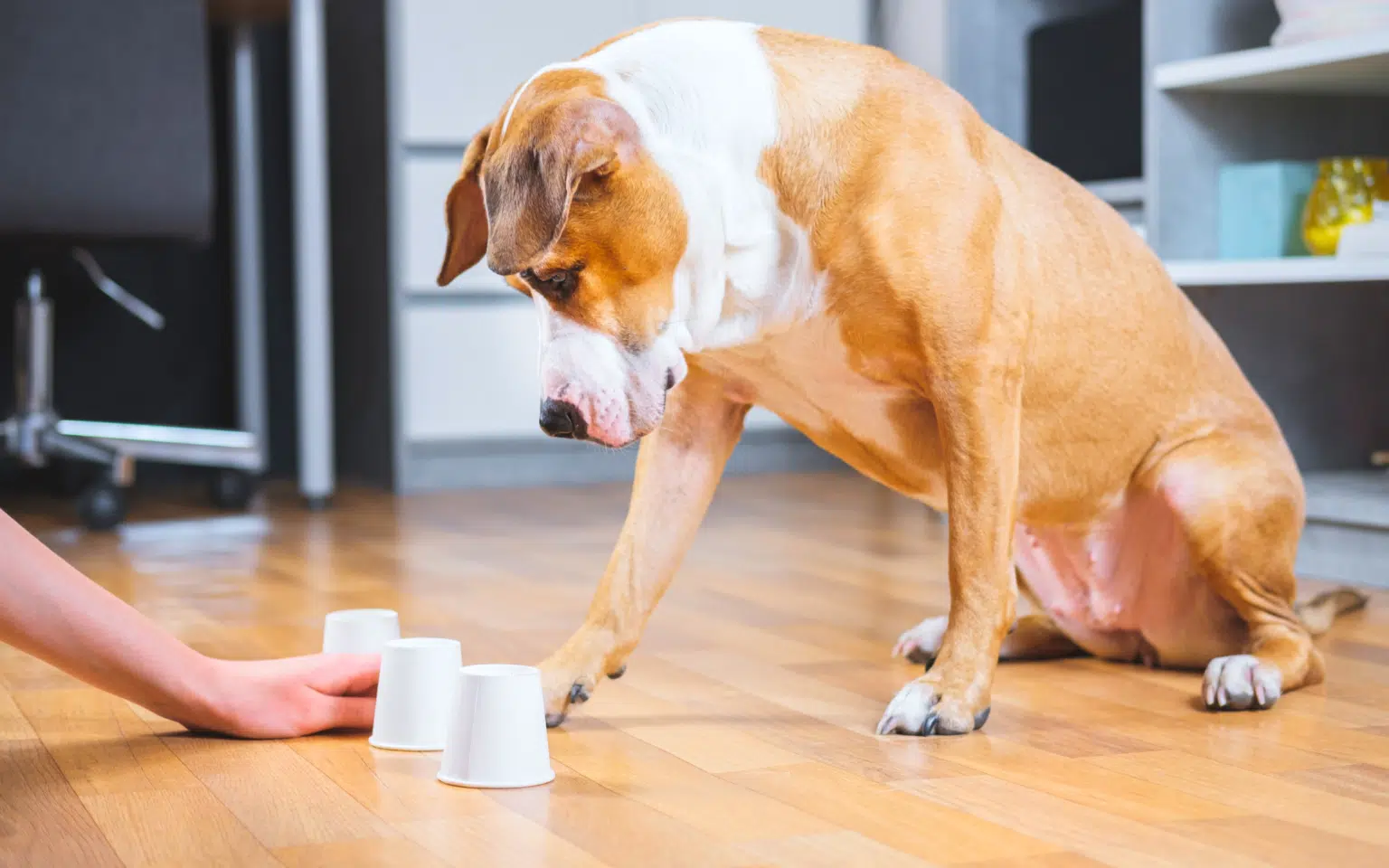
Training Sessions Should Feel Like Games
Short, focused training sessions are one of the best ways to engage a dog mentally. But they have to feel rewarding, not repetitive.
I remember working with a German Shepherd that had rock-solid obedience but zero enthusiasm. The owner ran drills like a military routine—same commands, same order, every time.
We changed the structure completely. Randomized commands, added movement, mixed in play. The dog lit up almost immediately. Same skills, different experience.
Dogs don’t just need structure—they need variation within that structure.
Let Them Make Choices
This is something many owners struggle with. They want control, which is understandable. But constant control removes opportunities for dogs to think.
I often advise letting dogs make small decisions during the day. Choose which toy to play with. Pick the direction for part of a walk. Figure out how to solve a simple challenge without interference.
One of my long-term clients had a nervous mixed-breed dog that relied heavily on cues. We started giving her small choices during activities. Over time, her confidence improved noticeably—not because we trained confidence directly, but because we allowed her to use her brain.
Common Mistakes I See All the Time
The biggest issue isn’t lack of effort—it’s misdirected effort.
Some owners rely entirely on physical exercise, thinking a tired dog is a well-behaved dog. Others buy expensive toys but don’t change how they interact with their dog.
And then there’s overstimulation. Yes, that’s real. I’ve worked with dogs that were constantly “entertained” but never allowed to settle. Mental stimulation should have a clear beginning and end. Dogs need downtime just as much as engagement.
What Actually Works in Everyday Life
You don’t need hours of effort or a house full of equipment. Most of the time, I recommend:
- Ten to twenty minutes of focused mental activity daily
- Mixing scent work, training, and simple problem-solving
- Paying attention to your dog’s energy afterward—not just during
A mentally satisfied dog behaves differently. They rest more deeply. They react less impulsively. You’ll notice it in subtle ways first.
The Shift That Changes Everything
The biggest shift isn’t adding more activities. It’s changing how you see your dog.
Once you start viewing them as thinking, problem-solving animals—not just pets that need exercise—your approach changes naturally. You begin looking for ways to engage their minds throughout the day, not just tire out their bodies.
And from what I’ve seen over the years, that’s where real behavior change begins.