From the Perspective of a Feline Veterinarian
I’m a small-animal veterinarian who has treated a lot of cats, but Maine Coons have a way of standing out the moment they walk through the clinic door. Part of it is the size, of course, but most of it is the personality — confident, easygoing, and very people-oriented.
Caring for them isn’t difficult, but it is different in a few specific ways. Over the years, I’ve seen the same patterns repeat: owners doing many things right and a few things that cause avoidable problems. Here’s how I coach my own clients who share their homes with these big, gentle cats.
Please start with the reality of their size.
Maine Coons are not just “big fluffy cats.” They are structurally larger: heavier bones, broader chests, and substantial muscle once mature. That affects daily care more than people expect.
I remember a couple bringing in their first Maine Coon after having only had slim domestic shorthairs. They bought a standard litter box and shallow food dishes. Within weeks, the cat was having “accidents” beside the box — not behavioral, just that his back end didn’t quite fit inside. A larger, sturdier litter box solved the problem overnight.
Oversized cats need oversized basics: solid scratching posts that won’t tip, carriers meant for medium dogs, and food bowls that don’t cram whiskers. You don’t need luxury gear; you need equipment that won’t collapse under them.
Grooming: not just brushing the fluffy parts
People see the long fur and think brushing is the whole story. The truth is that coat care for Maine Coons is as much about prevention as about detangling.
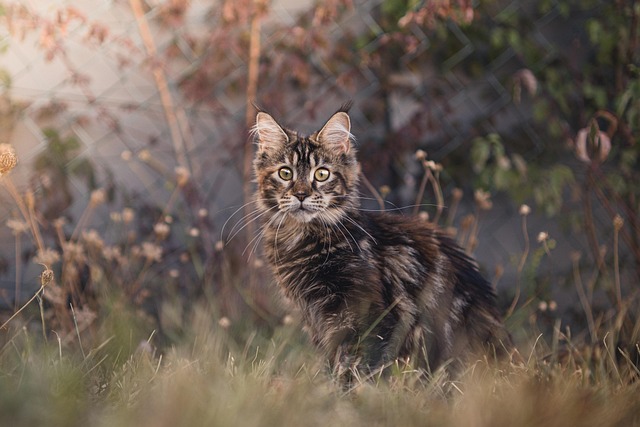
Their fur is semi-long and uneven — pants on the back legs, a ruff around the neck, tufts between toes. Mats don’t usually form evenly. I often find the first trouble spots in three places:
- behind the ears
- armpits (the front leg “pits”)
- base of the tail
Owners usually realize it after the cat starts resisting touch in those areas. One spring, a client brought in a sweet older Maine Coon who had developed solid mats under the armpits that could only be safely removed under light sedation because they were pulling the skin. She felt awful because she was brushing regularly — just missing the hidden spots.
My practical advice is simple: run your fingers, not just the brush. If your fingers hesitate, a small mat is forming. A stainless-steel comb does a better job than soft slicker brushes in those dense areas. Keep grooming sessions short and frequent, rather than marathon sessions that both of you start dreading.
Diet and weight control matter more than you think.
Because they’re large, people underestimate what “overweight” looks like on a Maine Coon. I’ve heard the same sentence dozens of times: “He’s supposed to be big, right?” Size and fat are not the same thing.
In my experience, these cats are prone to two things when the diet is mishandled: obesity and gastrointestinal upset from frequent food switching. They do best on consistent, high-quality nutrition and measured meals rather than free-feeding giant bowls.
One owner brought in a male Maine Coon who weighed well into the twenties. He could barely jump onto the couch, and his owners thought he was just “laid back.” After controlled weight loss, he surprised them by racing around the house like a young cat. What looked like a calm personality was actually extra weight slowing him down.
You should be able to feel ribs through a layer of muscle and fur, see a waist from above, and notice a slight tummy tuck from the side. If you’re guessing, you’re not alone — most people with fluffy cats do. A veterinary body condition assessment once or twice a year can prevent many health problems later.
Activity and mental stimulation
Maine Coons aren’t hyperactive, but they are athletic and curious. Left unstimulated, they don’t usually tear the house apart — they just quietly get out of shape.
The difference shows up later in their joints.
I’ve watched Maine Coons who were encouraged to climb and play age much more comfortably than those who lived mainly on the couch. Tall, sturdy cat trees, food puzzles, wand toys, and short daily play sessions do more than “burn energy.” They maintain muscle mass that supports their larger frames.
One of my long-time patients, a senior Maine Coon, still uses stairs and jumps onto low furniture without difficulty, mainly because his owner made a habit of ten minutes of structured play most evenings. That small investment adds up across years.
Joint and orthopedic health: watch early, not late
Because they’re large-bodied, I screen Maine Coons mentally for joint concerns from kittenhood onward. I don’t mean panic or assume problems — I keep it in mind.
I see:
- earlier signs of hip discomfort in some lines
- Mild stiffness was ignored because “big cats move slowly.”
The mistake I see most often is people waiting until the cat is obviously limping before asking questions. I recommend coming in sooner if a Maine Coon hesitates to jump onto previously easy furniture, bunny-hops stairs, or starts avoiding play.
Supportive steps at home make a difference: maintaining lean body weight, offering soft bedding, and using ramps or intermediate step-up furniture for very tall beds or windows. I’m not a fan of loading cats with joint supplements without reason, but for some individuals, targeted veterinary guidance helps.
Heart health deserves attention in this breed.
Without being alarmist, I do talk honestly with owners about hypertrophic cardiomyopathy (HCM), a heart disease seen in Maine Coons more than many other breeds. Not every Maine Coon will develop it, but pretending it doesn’t exist doesn’t help anyone.
I’ve detected quiet heart murmurs during routine vaccine visits and, after referral to a cardiologist, caught early disease before the cat ever showed symptoms. Those cats lived whole lives because their owners took monitoring seriously rather than assuming a murmur “didn’t mean anything.”
My perspective is straightforward: if your veterinarian recommends an echocardiogram because of a murmur or family history, it’s usually worth doing. I’ve also had perfectly healthy Maine Coons with benign murmurs — but we only knew they were benign because they were checked.
Social needs: they like being “with” their people
Maine Coons are often described as dog-like, and that isn’t far off. They tend to follow owners from room to room, “help” with household chores, and vocalize in chirps rather than meows.
The biggest mistake I see is assuming that because they’re cats, they’ll be fine with long hours of isolation. Many of them do poorly with prolonged solitude. They won’t shred doors like some dogs, but behavior changes creep in — overeating, overgrooming, clinginess, or withdrawal.
I’ve worked with a client who moved from a bustling household to living alone and noticed her Maine Coon started licking its belly bald. Once we adjusted the routine, added interactive play, and eventually adopted a second cat with a compatible temperament, the overgrooming eased dramatically.
You don’t have to get a second pet, but you do need to recognize that this is usually a highly social breed that thrives on interaction.
Litter box and cleanliness realities
Bigger cat, bigger output — and that means more odor and more litter tracking unless you plan. Covered boxes are often too small; self-cleaning boxes don’t always fit these cats comfortably. I’ve had the best reports from owners who use large, open boxes with high sides and unscented clumping litter.
A recurring issue I treat is urinary tract inflammation triggered by stress from dirty or cramped boxes. A Maine Coon using a tiny box is similar to a tall adult using child-sized furniture: technically possible, but unpleasant enough that avoidance starts.
My rule of thumb in practice: if your cat is peeing beside the box, rule out medical issues, but also check size and cleanliness before assuming “behavioral problem.”
Routine veterinary care from someone who actually watches the breed
General cat care applies, but experience with the breed changes what I look for:
- I listen more carefully for subtle heart murmurs
- I palpate joints and spine with their size in mind
- I watch weight trends over time rather than single numbers
I’ve had Maine Coon owners apologize for “overreacting” to minor changes. I usually tell them that they’re not overreacting — they’re noticing. With larger breeds, subtle shifts carry more meaning, and I’d rather check early than treat preventable disease later.
Final thoughts from years in the exam room
Caring for a Maine Coon is less about special tricks and more about respecting what they are: large, intelligent, social cats with a few breed-linked tendencies. The owners who do best are the ones who accept their size, stay ahead on grooming, keep them lean and active, and don’t dismiss early signs of heart or joint trouble.
The reward is huge — literally and figuratively. Some of the most affectionate, steady-natured cats I’ve met have been Maine Coons who were adequately cared for from the start.
If you share your home with one, you don’t just have a big cat. You have a companion who thrives when their needs are treated as real rather than ornamental.