
I’ve been baking pet-safe treats for more than a decade, both in small commercial kitchens and at home for my own dogs. Over the years, dog owners have asked me one question more than almost any other: Is there a simple way to bake a cake for my dog without making it complicated?
The answer is yes. In fact, the easiest dog cakes often turn out better than the elaborate ones. Dogs care far more about smell and flavor than decoration. After baking hundreds of dog treats and birthday cakes for clients’ pets, I’ve learned that simple ingredients and straightforward preparation usually lead to the happiest tail wags.
I still remember the first dog cake I baked professionally. A regular customer at the bakery where I worked wanted something special for her senior Labrador. I tried to make it look like a traditional cake with frosting swirls and decorations. The dog ignored the decoration entirely and went straight for the peanut butter scent in the middle. That moment taught me a valuable lesson: focus on flavor and safety, not appearance.
Here’s the method I recommend to dog owners who want an easy, reliable cake.
Start With Dog-Safe Ingredients
One of the biggest mistakes I see people make is assuming dogs can eat the same cake ingredients humans do. Sugar-heavy frostings, chocolate, and artificial sweeteners can cause serious problems.
Through trial and plenty of conversations with veterinarians and pet nutrition specialists, I’ve settled on a small group of ingredients that are both safe and appealing to most dogs:
- Natural peanut butter (make sure it does not contain xylitol)
- Pumpkin puree or mashed banana
- Eggs
- Oat flour or whole wheat flour
- Plain yogurt or unsweetened applesauce
These ingredients are easy to find, and they create a texture dogs love.
A few years ago, a client brought me peanut butter labeled “natural,” but it turned out to contain xylitol. That ingredient is extremely toxic to dogs. Since then, I have always told people to check the label twice. It’s one of those small precautions that matter far more than fancy decoration.
The Easiest Dog Cake Recipe I Use
After experimenting with many variations, this is the simplest cake I return to again and again. It takes about ten minutes to prepare.
Ingredients
- 1 cup oat flour or whole wheat flour
- 1 egg
- ¼ cup natural peanut butter
- ¼ cup pumpkin puree
- ¼ cup unsweetened applesauce
- ½ teaspoon baking powder
Directions
- Preheat your oven to 350°F (175°C).
- Mix all ingredients in a bowl until smooth.
- Pour the batter into a small greased baking dish or silicone mold.
- Bake for about 20 minutes, or until a toothpick comes out clean.
- Allow the cake to cool completely before serving.
This simple formula produces a soft, moist cake that most dogs devour quickly.
One spring, I baked a version of this cake for my own rescue dog’s adoption anniversary. He’s normally picky with treats, but the smell of pumpkin and peanut butter had him pacing the kitchen long before it cooled.
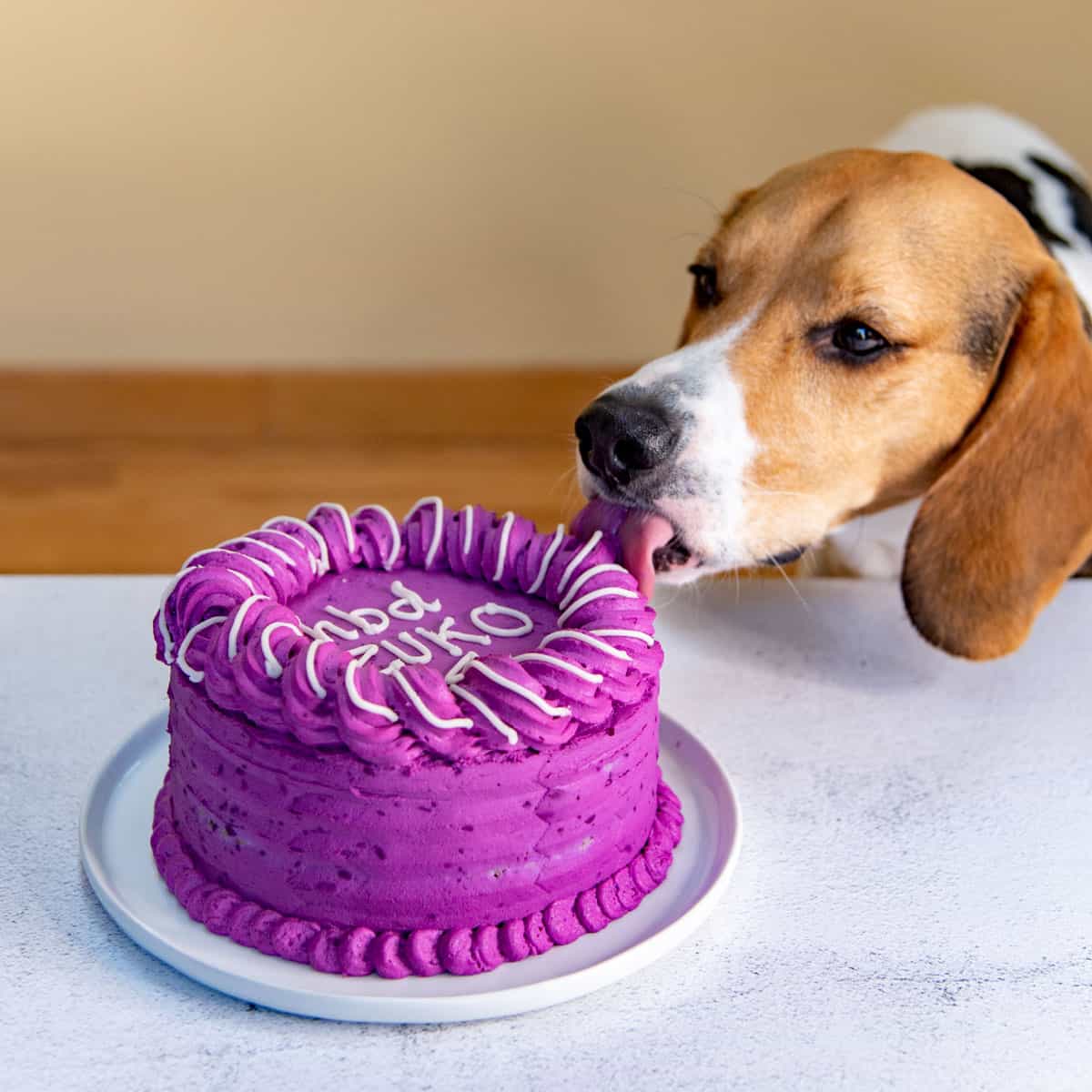
Simple Frosting Dogs Actually Enjoy
Many people ask about frosting. In my experience, complicated frosting recipes rarely matter to dogs.
The easiest option is mixing:
- Plain Greek yogurt
- A spoonful of peanut butter
Spread it lightly on the cooled cake.
I’ve tested elaborate dog frostings made with cream cheese and fancy ingredients, but most dogs react the same way to simple yogurt and peanut butter. Save yourself the extra effort.
Mistakes I See People Make
Over the years, I’ve watched plenty of dog cakes fail for avoidable reasons.
One of the most common problems is adding too much flour. The batter should be thick but still spreadable. If it becomes stiff like bread dough, the cake will turn dry and crumbly.
Another mistake is serving the cake warm. Dogs are enthusiastic eaters, and hot food can burn their mouths. I once saw a dog gulp down a warm cupcake so quickly that the owner panicked. Letting the cake cool completely prevents that.
Portion size is another overlooked issue. Even healthy ingredients can upset a dog’s stomach if served in large quantities. A cake made for a celebration should still be shared in small pieces.
Small Variations That Work Well
Once you’ve tried the basic recipe, it’s easy to adjust the flavor.
For dogs that love fruit, mashed banana is a good alternative to pumpkin. For dogs with sensitive digestion, plain applesauce tends to be gentler.
Some owners like adding shredded carrot or small apple pieces to the batter. I’ve done this for several clients’ dogs who enjoy crunchy textures.
One memorable order involved a golden retriever who adored blueberries. I folded a handful into the batter. The owner later told me the dog carefully picked each berry out before eating the rest of the cake.
That’s another reminder that dogs experience food differently than we do.
A Practical Tip for First-Time Bakers
If you’re making a dog cake for the first time, bake it in a small pan or even a muffin tin. Smaller portions cook more evenly and are easier to serve later.
Professional pet bakeries often do exactly this because it prevents waste and keeps the treats fresh longer.
Why Simple Dog Cakes Work Best
After years of baking for dogs, I’ve noticed something consistent. Dogs rarely care about how a cake looks. What matters to them is smell, softness, and familiar flavors.
Peanut butter, pumpkin, banana, and yogurt consistently trigger excitement. Fancy shapes, bright colors, and decorations are mainly for humans.
Whenever I see someone stressing over how their dog’s birthday cake should look, I remind them of that Labrador from my early baking days—the one who ignored the decorations and went straight for the peanut butter center.
For the best results, keep your dog’s cake simple, focus on safe ingredients and familiar flavors, and serve it in small, easy-to-eat portions. Your dog will enjoy it more, and you’ll enjoy the process too. So next time you celebrate your dog, remember to keep it easy—focus on flavors they love and enjoy sharing the moment with them. Happy baking!