
Understanding Feline Herpesvirus
As a licensed veterinarian practicing in Texas for over a decade, I’ve treated more cases of feline herpes than I can count, and one question I hear repeatedly from cat owners is: “Is cat herpes contagious?” From my experience, understanding this virus is less about fear and more about practical precautions to protect both cats and their human companions.
How the Virus Spreads Between Cats
Feline herpesvirus, officially called FHV-1, is indeed contagious—but primarily to other cats. I first saw this vividly when a customer brought in a litter of three kittens last spring. One of them had developed sneezing, watery eyes, and nasal discharge, and within a week, all three showed similar symptoms.
The virus spreads through direct contact with nasal, ocular, or oral secretions or through shared food and water bowls. It’s striking how quickly it can move through a household, even when you think you’re careful.
Stress and Flare-Ups
I’ve also found that stress plays a big role in triggering flare-ups. In my clinic, I once treated an adult cat that had been healthy for years but developed a severe bout of conjunctivitis after moving to a new home. That day, I explained to the owner that while the virus is contagious to other cats, humans and dogs are not at risk.
I’ve seen pet owners panic unnecessarily, thinking they or their children might catch it, but that’s not the case. That misconception often leads to over-cleaning and anxiety, while the real focus should be on keeping cats separated during active outbreaks.
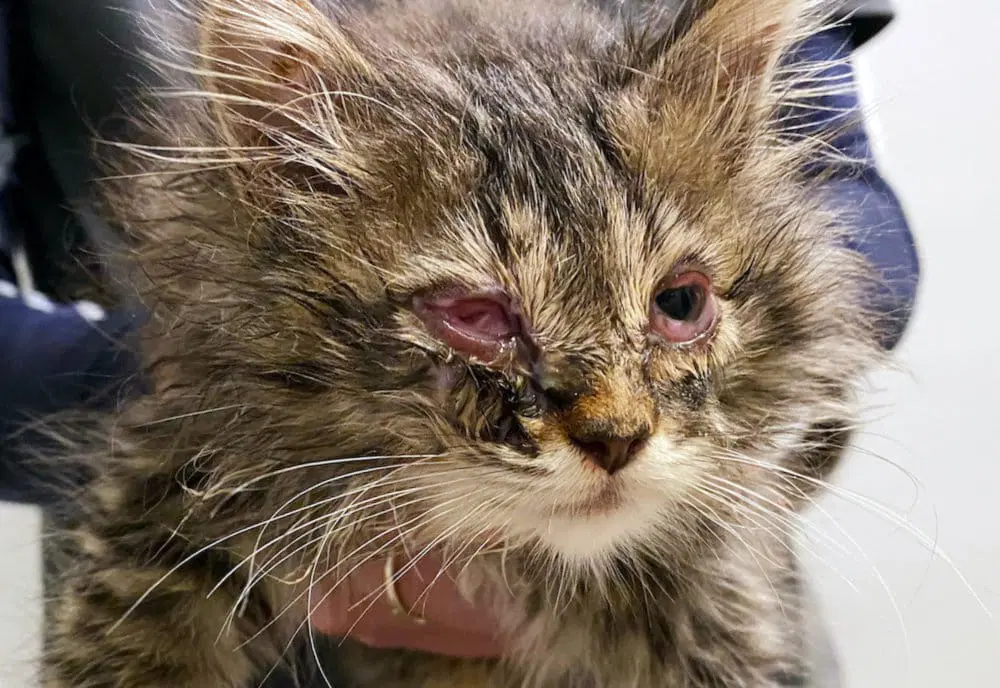
Managing Infection in Multi-Cat Homes
In multi-cat households, containment can be challenging. I recall a situation in which a family had five cats, one of whom was exposed during a grooming session. The virus spread rapidly, and the family had to isolate the affected cat and disinfect common areas.
Eye drops, supportive fluids, and minimizing stress were key to helping the cats recover. In my professional opinion, vaccination is helpful but not a cure; it can reduce the severity and frequency of flare-ups, which I often recommend for cats at higher risk, especially kittens in shelters or multi-cat homes.
Practical Prevention and Care Tips
Practical steps that have worked for my clients include washing hands after handling an infected cat, avoiding sharing bowls or litter boxes during an outbreak, and monitoring cats for early signs like sneezing or eye discharge. In my experience, early intervention is what prevents a minor flare from escalating into a more serious infection.
Conclusion: Stay Informed, Not Alarmed
While cat herpes can be alarming, understanding that it spreads between cats—not humans—helps owners focus on the right precautions. I’ve seen too many good cats suffer longer than necessary because owners either underestimated the virus or panicked unnecessarily. With proper care, awareness, and a little patience, most cats recover well and continue to thrive even if they carry the virus for life.