
As a licensed veterinarian practicing in Texas for over a decade, I’ve guided countless cat owners through the sometimes tricky task of checking their feline companions’ health. One common concern I hear often is: “Can I use a human thermometer on my cat?” The answer is yes, but with caution, patience, and a few practical techniques to make the process safe and accurate.
Understanding the Basics
Cats naturally have higher body temperatures than humans. While an average human sits around 98.6°F (37°C), a healthy cat ranges between 100.5°F and 102.5°F (38°C–39.2°C). This difference matters because readings from a human thermometer, if not interpreted correctly, can lead to misjudgments about your cat’s health.
Early in my practice, I had a client who was worried their cat had a fever. They had attempted to use a standard digital oral thermometer without success, reporting erratic readings. After demonstrating proper technique, we obtained an accurate reading within moments—and the cat turned out to be perfectly healthy. This scenario happens more often than you might think.
Choosing the Right Thermometer
Not all human thermometers are suitable for feline use. Digital thermometers with a flexible tip work best. Mercury thermometers, while accurate, are risky if dropped or chewed. Ear or forehead thermometers designed for humans often fail to register a cat’s temperature accurately because of differences in ear canal shape and fur coverage.
I personally keep a few flexible digital thermometers in my clinic, specifically for cats. I’ve seen cats tolerate them much better than rigid devices, and they produce reliable readings when used correctly.
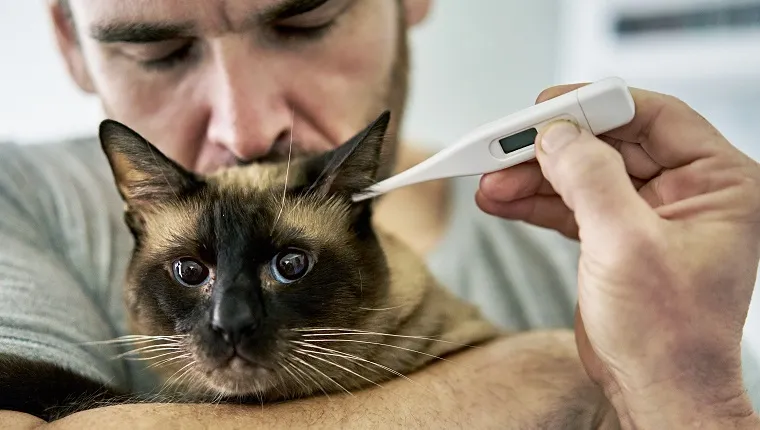
Preparing Your Cat
Before you attempt to take a temperature, create a calm environment. Cats pick up on stress quickly, which can temporarily spike their body temperature. I often suggest:
- Wrapping your cat gently in a towel, leaving only the tail exposed
- Asking a family member to help hold the cat securely
- Speaking softly and moving slowly to prevent sudden reactions
One memorable case involved a nervous stray we had recently rescued. Wrapping her in a towel and approaching her slowly allowed us to take her temperature without causing her undue stress—a crucial step for accurate readings.
Step-by-Step Method
- Lubricate the Thermometer: Apply a small amount of petroleum jelly or water-based lubricant to the tip to make insertion smoother.
- Position Your Cat: Gently lift the tail and insert the thermometer into the rectum about 1 inch. Hold it in place steadily.
- Wait for the Reading: Digital thermometers usually beep within 10–30 seconds. Keep your cat wrapped and calm while you wait.
- Interpret Carefully: Record the temperature and compare it to the normal range (100.5°F–102.5°F). Anything above or below may warrant a call to your veterinarian.
I recall a time when a client’s cat appeared lethargic and refused food. The thermometer reading was 104°F—well above normal. Prompt veterinary intervention revealed a minor infection, and timely treatment prevented more serious complications.
Common Mistakes
Many cat owners rush the process. I’ve seen thermometers pushed in too quickly or readings taken while a cat is thrashing, resulting in inaccurate results or even injury. Another mistake is using oral or forehead readings; these are almost always unreliable for cats.
Patience is key. Even a few minutes of calm, gentle handling can make the difference between a correct reading and a confusing one.
Final Thoughts
Using a human thermometer on a cat is feasible, but it requires preparation, care, and the right tools. In my experience, owners who approach the task with patience and respect for their cat’s comfort achieve the best results. Remember, a thermometer is just one tool; observing your cat’s overall behavior, appetite, and activity level is equally important in assessing health.
By handling the process thoughtfully, you can keep your feline friends safe and healthy without unnecessary stress.