
A Groundskeeper’s Honest Take
I’ve managed lawns, sports fields, and commercial green spaces for over a decade. The most common question I get is: “Can I leave the dog poop? Isn’t it like fertilizer?”
Early in my career, I believed the idea that dog poop could help your lawn. Years of work proved the opposite—dog poop does real harm to grass and is not a substitute for good fertilizer.
Why Dog Waste Isn’t Like Other Manure
The confusion comes from comparing dog waste to cow or horse manure. I’ve worked on properties near farms where aged manure actually improved the soil beautifully. But dogs are different.
Dogs eat protein-heavy diets, so their waste has high nitrogen and salt levels—much more than grass tolerates. Instead of acting as fertilizer, it causes chemical burn.
A client once had a healthy lawn except for yellow patches where their Labrador favored as bathroom spots—classic nitrogen burn.
What Actually Happens to Your Grass
Leaving dog poop on the lawn leads to several problems: The grass beneath gets smothered, reducing sunlight and airflow.
- Excess nitrogen burns the roots.
- Bacteria and parasites begin to accumulate.
- Over time, the soil balance gets disrupted.
The real result of not removing dog poop is long-term turf harm, not just visible patches. I’ve seen many lawns that only recovered after reseeding because of this issue.
One spring, I worked on a lawn that had winter waste left over. When the snow melted, the grass was full of dead patches. We raked, treated, and reseeded large sections, but it took weeks for them to recover.
The Smell and Hygiene Factor
Beyond harming grass, there’s a bigger issue—hygiene.
Dog waste is a health and lawn problem. Besides harming grass, it can expose kids and pets to harmful bacteria and parasites—risks you do not want in your yard.
When I maintain neglected yards, the smell alone makes the job difficult. Waste attracts flies and contaminates soil after rain.
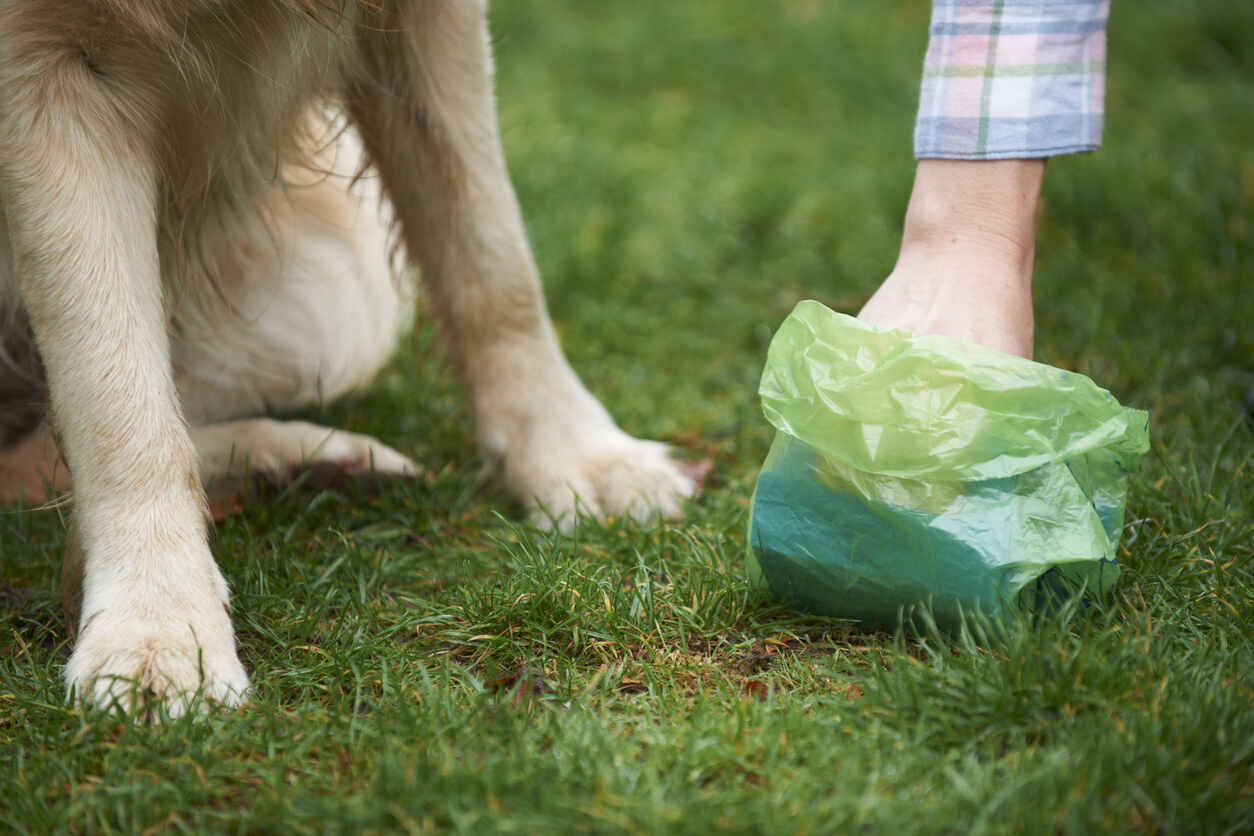
A Common Mistake I See All the Time
Many homeowners think occasional cleanup is enough. They’ll leave the waste for a week or two, then clear it all at once.
This waiting period is when the most lawn damage from dog poop occurs.
Fresh waste is easier to remove and less harmful. Letting it sit, especially in warm weather, causes burn spots.
One client switched from weekly to daily cleanup. Soon, patchy areas stopped appearing.
Can Dog Poop Ever Be Useful?
Technically, yes—but not directly on your lawn.
With proper composting, dog waste can be safely broken down. But this isn’t as simple as tossing it into a pile in your backyard. It requires controlled conditions, high temperatures, and time to kill harmful pathogens.
In my professional work, I rarely recommend this route to homeowners unless they’re fully committed to the process and willing to closely monitor composting conditions. Otherwise, the heaYears of lawn care and repairs taught me what works:What I Recommend Instead
From years of maintaining lawns and fixing preventable damage, here’s what actually works:
Pick up waste promptly. Daily removal is ideal, especially if you have multiple dogs.
Rinse the area occasionally. If your dog tends to use the same spot, a quick hose-down can dilute nitrogen. Train your dog to use a design. Stay consistent.nsistent. Healthy lawns thrive on small, repeated habits.n in much better shape.
Stay consistent. Lawn health is less about big fixes and more about small, repeated habits.
My Bottom Line After Years in the Field
Dog poop is not fertilizer. It consistently creates damage, not healthy grass. Most of my lawn repairs are fixing pet waste problems—not soil improvement.
After years of seeing lawns suffer, my advice is clear: picking up dog poop is non-negotiable for yard health. It’s one essential habit that prevents a chronic problem.