
Perspective of a Speech-Language Pathologist
I’m a speech-language pathologist who works primarily with children and adults dealing with sound production and word-finding issues, and I’ve heard just about every funny mix-up you can imagine. One of the most common is people saying or typing “cars” instead of “cats.” The reasons behind it are actually familiar to those of us who work with speech and language every day.
Over the years, I’ve seen this confusion happen in clinics, in schools, and even among perfectly fluent adults sending quick text messages. It’s usually not about intelligence or lack of knowledge. It’s about how our brain processes sounds, letters, and habits.
Sound similarities make slips easy.
The words “cats” and “cars” are close neighbors in the mouth. Both start with that intense “k” sound, both end with an “s” sound, and only the vowel changes in the middle. In fast or casual speech, vowels are often swallowed or reduced. I’ve sat across from parents during evaluations who said, “He loves cars,” only to clarify, laughing, “I meant cats immediately.” Their tongue knew the route; it just took the wrong turn.
In my experience, children who are still developing clear speech often substitute the “a” vowel or soften the “t” sound at the end of words. So “cat” can slide toward “car” without the child realizing it. The first time I heard a preschooler proudly say, “My car sleeps on my bed,” his mother looked horrified until he followed it with, “and it purrs.” We all understood instantly what happened.
These aren’t mistakes to worry about in isolation. They’re part of how speech patterns mature.
Autocorrect quietly plays a role.
Not every mix-up happens out loud. Many happen in phones.
“Cars” is used more frequently in texting than “cats” for a lot of people, and predictive text tools learn that habit. I’ve reviewed communication logs with adult clients recovering from strokes, and several of them laughed while showing me messages saying things like, “My cars knocked the plant over again.” They hadn’t said the wrong word in their head; their phone made the “correction,” and their brain skimmed right past it.
Typing is fast. Proofreading is slower. The wrong word gets sent before anyone notices.
Accents and dialects can blur the difference.
Working with bilingual families, I often hear vowel shifts that make “cat” and “car” nearly indistinguishable. Certain accents pull the vowel toward a broader “ah” sound. A caregiver once apologized to me, insisting she wasn’t mixing up English words. She wasn’t. In her dialect, the two words sounded almost the same. Listeners who aren’t used to that accent assume the wrong word and repeat it.
This is a listening problem as much as a speaking one.
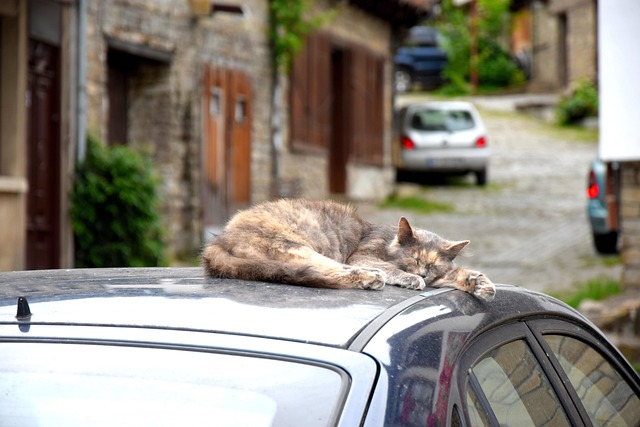
The brain favors familiar categories.
There’s also a psychological piece I’ve noticed repeatedly.
Our brains like familiar categories. For many people, cars are talked about far more often than cats — commuting, repairs, purchases, traffic. So, under speed or distraction, the brain reaches for the more common word even when the picture in the mind is clearly a cat. During a session last spring, an adult client doing naming exercises looked at a picture of a cat, said “car,” shook his head, and immediately corrected himself. He wasn’t confused about the animal. His brain grabbed the wrong high-frequency word.
Fatigue, stress, or multitasking increases the likelihood of these slips. I see it most often toward the end of long workdays.
Is it ever a sign of a problem?
Most of the time, no.
Occasional word swaps — cats/cars, dog/god, form/from — happen to everyone. I make them myself. They’re just a sign that speech is fast and automatic.
I do pay closer attention if:
- The person consistently substitutes unrelated words
- There are sudden changes in speech or understanding
- The person seems unaware they’re doing it
- It comes with difficulty finding simple words or following a conversation
Persistent or worsening word-mixing, especially in adults, deserves a medical evaluation. I’ve referred several clients for neurological checks over the years after noticing broader language changes, and that caution can matter.
But isolated “cats/cars” mix-ups? Those are usually harmless.
How I suggest people handle it
My advice, based on years of therapy rooms, classrooms, and kitchen-table conversations: don’t panic, slow down. If you’re the speaker, pause and repeat the word. If you’re the listener, ask for clarification instead of assuming.
For parents worried about a child who says “car” for “cat,” I usually recommend listening for patterns. If the child is otherwise communicating clearly, enjoying conversation, and showing progress over time, gentle modeling (“Yes, the cat is sleepy”) does far more good than correcting every sentence.
Language is messy, human, and sometimes funny. Calling cats “cars” is one of those small reminders that our mouths, our phones, and our brains aren’t always perfectly synchronized — and that’s okay.