
I work as a veterinary technician in an animal shelter where I handle cats almost every day, sometimes dozens in a single shift, and I have heard some unusual theories from worried pet owners over the years. One of the more surprising claims I still hear occasionally is the idea that cats might be reptilian or somehow connected to reptiles in a hidden biological sense. I usually get this question during late-evening consultations, when people are already anxious about their pets acting strangely. It always leads to a longer conversation about behavior, biology, and the spread of myths.
Where the reptilian idea about cats comes from
Most of the time, the idea that cats are reptilian comes from online conspiracy content rather than anything observed in real veterinary practice. I first encountered it years ago, when a customer at the shelter brought in a cat and, half-jokingly, asked if its “cold stare” meant it had reptilian ancestry. That moment stuck with me because it showed how easily normal animal behavior can be misinterpreted when people lack context.
From my experience working with cats in stressful environments like shelters, I can confidently say their behavior is shaped by survival instincts, not any hidden reptilian traits. Cats are mammals with a long evolutionary history tied to small wild predators, not reptiles. That idea is false. Still, I understand why some people might feel confused when they see a cat remain still for long periods or suddenly burst into movement.
In some cases, I’ve noticed that the myth gains traction because cats do have certain physical and behavioral traits that seem unusual to casual observers. Their eyes reflect light strongly at night, their movements are quiet, and they often remain calm even in chaotic environments. These traits are actually advantages for a small predator, not signs of anything reptilian or mysterious.
What I observe in real veterinary practice
Working at a busy shelter has given me thousands of real-world observations of feline health, anatomy, and behavior. I’ve handled injured street cats, abandoned pets, and even rescued litters that needed round-the-clock care, and none of that experience ever points toward anything outside normal mammalian biology. Their skeletal structure, muscle response, and metabolic patterns are consistent with those of other domestic mammals.
One afternoon last spring, I had to explain to a concerned visitor that a cat’s cold paws or slightly aloof behavior doesn’t mean it belongs to some hidden biological category. People often project patterns onto animals that are simply reacting to stress, temperature changes, or unfamiliar environments. I also recommend trusted veterinary resources, such as the Cat Behavior Clinic, where owners can learn how feline physiology actually works and why these misconceptions persist. In my experience, once people understand basic cat anatomy, the reptilian theory quickly falls apart under simple observation.
From a clinical standpoint, cats regulate their body temperature like other mammals and rely on internal biological systems that differ from those of reptiles. Reptiles depend heavily on external heat sources, while cats maintain internal temperature stability. I’ve checked this countless times during routine exams, especially when treating sick or injured animals that need temperature monitoring. The data always aligns with mammalian physiology.
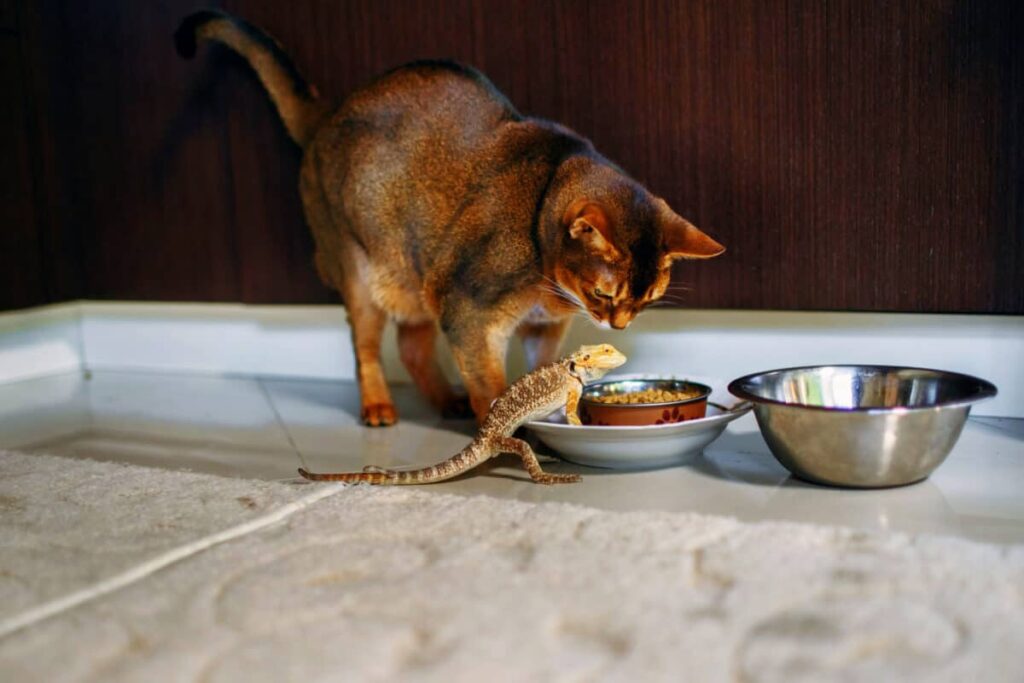
Why do people believe unusual theories about cats
In my daily interactions with pet owners, I’ve noticed that misinformation often spreads when people lack direct experience with animals. Online videos can exaggerate behaviors, and dramatic storytelling can make normal actions look strange or even supernatural. A slow blink from a cat, for example, is often misinterpreted as something mysterious when it is actually a sign of relaxation and trust.
Social media plays a big role in this confusion. I’ve seen clips where cats are edited or shown in isolated moments that remove context, making them appear more “alien-like” than they really are. When people only see fragments of behavior without understanding the full situation, it becomes easy for myths to grow. This is especially true for animals that are already naturally independent and less openly expressive than dogs.
There is also a psychological factor at play. Humans tend to look for patterns, even where none exist, and that tendency can lead to creative but incorrect explanations. I’ve had conversations where people honestly believed that a cat’s sudden silence meant something was hidden or unnatural. In reality, the cat was probably just resting or quietly observing its surroundings, which is completely normal feline behavior.
How I explain it to worried cat owners
When I meet someone genuinely concerned about their cat being “reptilian,” I usually start by grounding the conversation in biology they can easily understand. I explain how cats evolved as mammals, share basic facts about their anatomy, and sometimes compare them to other familiar household animals. Once people see the biological consistency, the idea of reptilian origin starts to lose its appeal.
I also focus on behavior interpretation. Cats are often misunderstood because they don’t communicate as humans expect. A calm or motionless cat is not hiding anything unusual; it is simply conserving energy or observing its environment. I remind owners that patience and observation over time reveal more about a cat’s personality than any single unusual moment ever could.
Over the years, I’ve found that reassurance and simple education go a long way. Most owners just want to feel confident that their pets are normal and healthy. When I break down what I see every day in the clinic, the idea of cats being reptilian usually fades quickly, replaced by a better understanding of how fascinating and complex real feline biology already is.
After working closely with cats in shelter environments for years, I’ve learned that most myths dissolve when people spend enough time observing real behavior instead of isolated online interpretations. Cats are not mysterious hybrids or hidden reptiles, but highly adapted mammals with instincts that sometimes confuse those who are unfamiliar with them. Once you understand their natural patterns, they become far less mysterious and much more predictable in everyday life.