
I run a small backyard nursery and boarding setup where cats wander more freely than I ever planned, and strawberry plants come up every season, whether I intend them or not. Over the years, I have watched curious cats sniff, paw, and sometimes chew on those plants, which pushed me to learn what actually happens when they do. I am not speaking from theory alone. I have cleaned up enough half-eaten leaves to have an opinion. The short answer is less alarming than most people expect.
What Happens When Cats Interact with Strawberry Plants
Most of the cats I have cared for treat strawberry plants as mildly interesting rather than irresistible. They might bat at the leaves or nibble once and walk away. In my experience, the reaction is usually limited to curiosity rather than ongoing chewing, especially if the cat has access to other textures, such as grass or safe chew toys.
Strawberry plants are generally considered non-toxic to cats, so a small nibble is unlikely to cause serious harm. However, the leaves and stems can be a bit rough on the stomach, and I have seen a few cats vomit after chewing too much. I keep an eye on new plants during their first week of exposure.
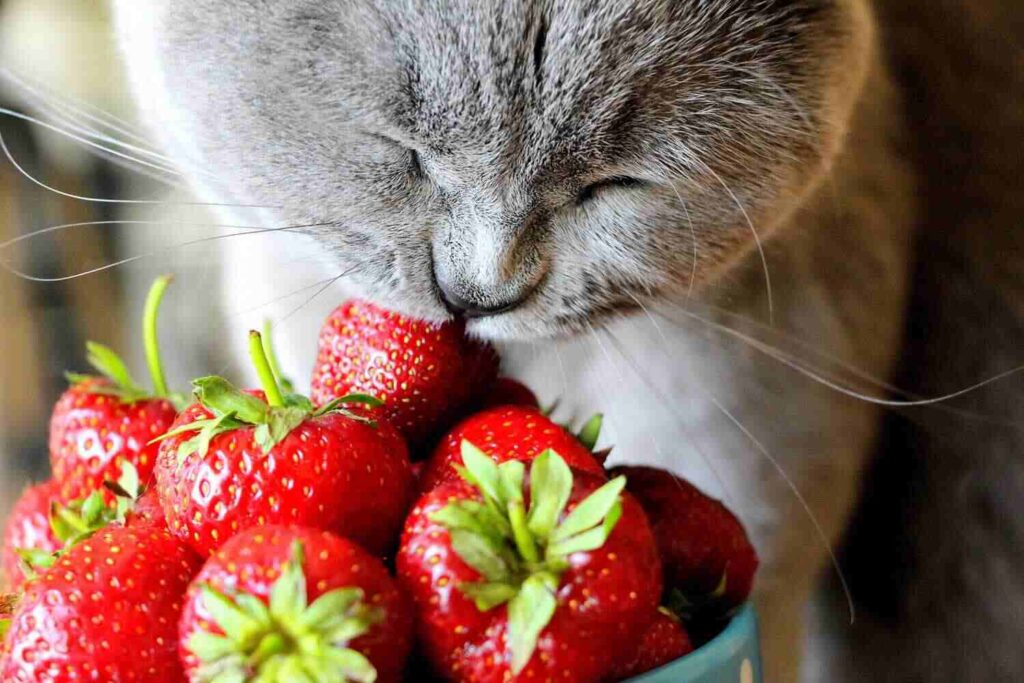
The fruit is different. Ripe strawberries draw more cat interest due to their smell and sweetness. One cat once stole two berries, then spent an hour pacing around as if triumphant—just a messy face and sticky floor, no lasting issues.
I emphasize this key point: safe does not always mean completely harmless. Even non-toxic plants can trigger digestive irritation if cats eat enough, and individual sensitivities vary. The main message—strawberry plants usually cause only mild and brief issues—is important to remember.
Hidden Risks Most People Miss
The plant itself is rarely the problem. More often, issues arise from how people treat their gardens. One client had healthy strawberry plants, but after spraying them with a general pesticide, their cat got into them before the residue fully broke down.
If you are trying to source safe gardening supplies or double-check plant care practices, I once came across a helpful reference on whether our strawberry plants are safe for cats that laid out which treatments tend to linger on edible plants.
Chemicals change everything. Even a plant that is safe in its natural state can become a problem if coated with pet-unfriendly fertilizers, insecticides, or fungicides. I have learned to read labels more carefully after a few close calls, especially during peak growing months when pests are more active.
Another overlooked detail is mold or rot. Overripe strawberries that fall to the soil can start to break down within a day or two, especially in humid weather. Cats that eat spoiled fruit can end up with stomach upset that looks worse than it really is. It is easy to blame the plant itself when the real cause is the fruit’s condition.
Signs Your Cat Ate Too Much
Most cases are mild. I have seen cats show signs like drooling, slight lethargy, or a single episode of vomiting after chewing on leaves. These symptoms usually pass within a few hours without intervention, especially if the cat is otherwise healthy.
One young cat I boarded ate more strawberry leaves than expected and vomited twice, refusing food for a few hours. I monitored him, kept him hydrated, and he was fine by morning.
Here are a few signs I watch for after plant exposure:
Loss of appetite, repeated vomiting, or unusual lethargy—especially together—mean I take it seriously. If a single symptom appears, it’s usually manageable, but a combination signals that something is wrong.
If symptoms persist beyond 24 hours, I usually recommend a vet check. It rarely gets that far. Still, I have learned not to ignore patterns, especially with cats that tend to chew on anything green within reach.
How I Manage Strawberry Plants Around Cats
I do not remove strawberry plants from my space, but I do manage how cats access them. Raised planters have worked well for me. Even an extra 2 feet of height reduces casual nibbling, since most cats prefer easier targets at ground level.
Providing alternatives helps more than restrictions. I keep trays of cat grass in a few spots, and I rotate them every week or so to keep them fresh. Cats that have something soft and safe to chew tend to ignore tougher leaves like those on strawberry plants.
Routine cleanup matters. Fallen fruit is picked up daily during the peak season, and I avoid letting anything sit long enough to attract insects or start to decompose. It sounds like a small habit, but it has prevented more issues than any spray or barrier I have tried.
I also pay attention to individual behavior. Some cats never touch plants. Others treat them like a personal buffet. Knowing which type you are dealing with makes it easier to decide whether you need barriers, supervision, or just a bit of common sense.
To sum up: strawberry plants and cats can safely share a garden, provided you monitor for minor risks like chemical exposure or spoiled fruit. Over the years, I’ve found problems mostly arise from chemicals or neglect, not the plant itself. Staying aware and managing small details makes the difference.
I run a small home-based cat grooming setup, and over the years, I’ve handled more coat types than I ever expected when I first picked up a pair of clippers. Straight, dense, double-coated, patchy rescues, you name it. But the first time I felt a cat with naturally curly fur, I paused for a second because it didn’t behave like any coat I had worked on before. That moment stuck with me, and since then, I’ve made a point to learn more about these unusual cats.