
I work in a small veterinary clinic. I often help cat owners who panic after their pets chew on houseplants. Over the years, I’ve handled many caladium cases. Concern quickly turns urgent when people realize their cat may have eaten it. My experience has shown that plant toxicity is not always obvious. Caladium looks harmless, but it can cause real discomfort for cats.
Why caladium becomes a problem for cats
Caladium contains calcium oxalate crystals that are sharp at the microscopic level. When a cat bites or chews the leaves, these crystals can irritate the mouth, tongue, and throat almost immediately. I’ve had cat owners describe it as sudden drooling or pawing at the face within minutes of exposure. One customer last spring brought in a young tabby that had been chewing on a decorative plant near a window.
That cat was restless, refusing food, and clearly uncomfortable. The owner had no idea the plant was even risky. Caladium is often sold as an ornamental indoor plant, so it ends up in living rooms and bedrooms without much warning. In my experience, most pet owners learn about its effects only after an incident at home.
Symptoms usually start fast, sometimes in 10 to 30 minutes. Cats react quickly. The irritation can look worse than it is, but it still needs attention. I remind owners that a small bite can trigger discomfort, especially in sensitive cats or kittens.
What I’ve learned from real cases
Most caladium exposures I see are from indoor cats who are curious or bored. They chew on leaves out of instinct, not hunger. I remember a case where a cat knocked over a plant stand. Caladium leaves were scattered across the floor, making it impossible to know how much was eaten.
In situations like that, quick evaluation matters more than guessing. I often suggest contacting a veterinary professional immediately instead of waiting to see if symptoms improve. For people who need guidance on plant-related pet risks or want structured advice, I’ve sometimes pointed them toward a local pet care resource for general plant safety information and first-response steps that can help reduce panic in the moment.
What I’ve noticed is that most caladium cases don’t become life-threatening, but they can still cause significant distress. Mouth irritation can last for hours, and some cats may refuse water due to discomfort. A few owners told me their pets hid under furniture after exposure, which is common behavior when they feel pain but don’t understand what caused it.
Severity varies widely. One cat may get mild drooling from a single bite. Another may react with swelling and repeated pawing at the mouth. There is no consistent pattern, so early attention is important.
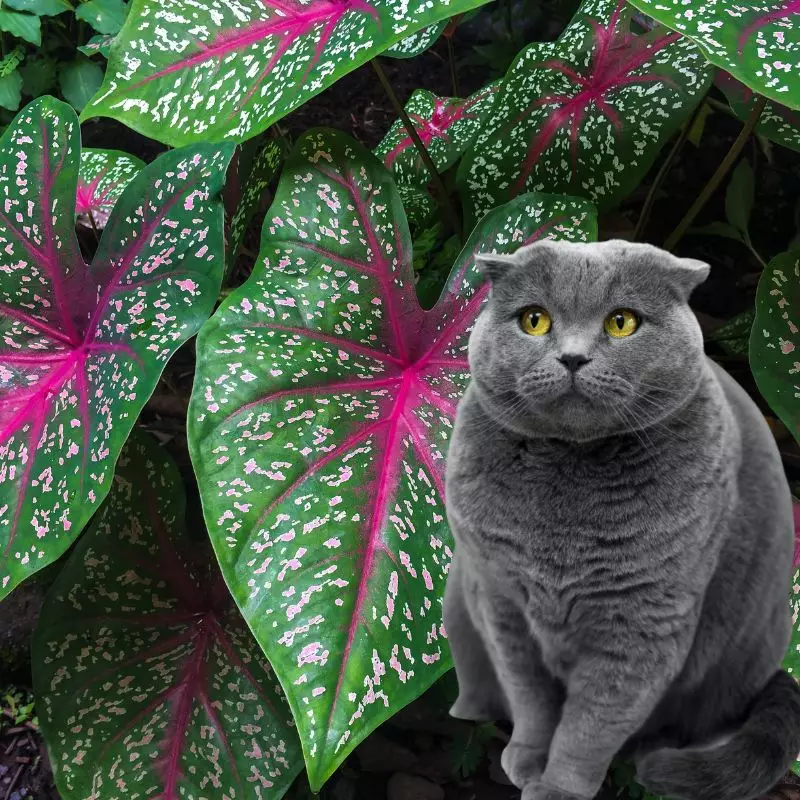
Symptoms I look for in caladium exposure.
In my daily work, I rely on a simple pattern of symptoms that often show up after caladium ingestion. The first sign is usually excessive drooling, which can be mild or heavy depending on how much is chewed. After that, I often see pawing at the mouth or face, which tells me the irritation is already intense.
Swelling around the lips or tongue is also common, though not in every case. Some cats become reluctant to eat or drink, even though they are usually food-driven. A few cases involved vomiting after ingestion, especially with larger pieces chewed rather than just licked.
Behavioral changes matter too. I once saw a calm indoor cat become unusually withdrawn after chewing a leaf. The owner initially thought it was stress unrelated to the plant, but the timing made it clear it was plant-related. Caladium reactions are often underestimated because the plant is so common in decorative setups.
Cats rarely ingest large amounts because the irritation is immediate, limiting severe poisoning but not discomfort. The experience remains unpleasant and requires attention.
How I advise cat owners to handle caladium at home
In most cases, I recommend removing the plant from the cat’s environment immediately. Even if the exposure was minor, keeping caladium accessible increases the chance of repeated chewing. I’ve seen households where the same cat returns to the same plant within days if it is not moved or replaced.
Hydration is a simple supportive step. Encouraging a cat to drink can ease irritation, though it won’t resolve symptoms immediately. I advise owners against forcing anything orally, as this can worsen stress and discomfort.
Some people should be cautious with home remedies—unnecessary handling of the cat’s mouth often worsens irritation. Instead, monitor your cat closely in the hours after exposure. If symptoms persist or swelling gets worse, contact a veterinary professional. Some people should be cautious with home remedies—unnecessary handling of the cat’s mouth often worsens irritation. Instead, monitor your cat closely in the hours after exposure. If symptoms persist or swelling gets worse, contact a veterinary professional promptly. To prevent future incidents, replace caladium with pet-safe indoor plants.
Once the toxic plant is gone, repeated emergencies rarely occur. Making this simple change keeps cats safer in the long run and reduces household risks. not uncommon in homes, but its effects on cats are often misunderstood until someone experiences them firsthand. Every case I’ve handled has reinforced the same lesson for me: curiosity and indoor plants can be a risky combination for cats, even when the plant looks harmless at first glance.