
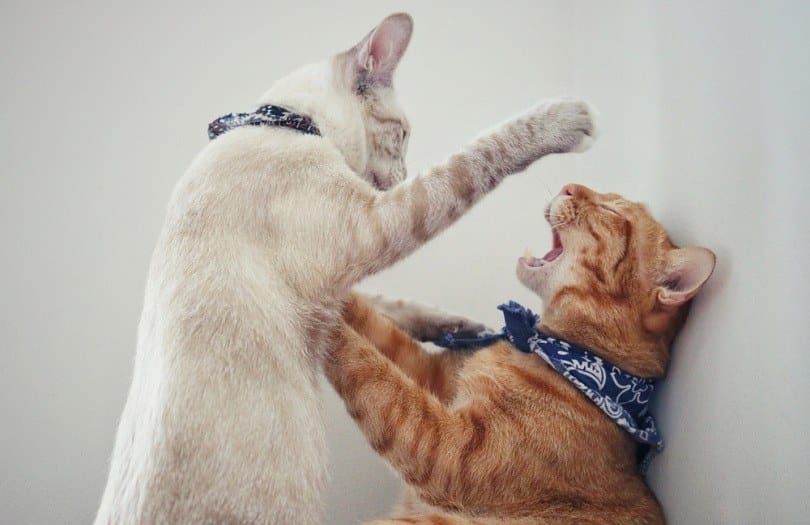
Watching cats interact can be both amusing and confusing, especially when they suddenly slap each other. These swift paw swats may look aggressive, but they often serve multiple purposes. Cats communicate in ways humans do not always understand, and physical gestures like slapping are part of their language.
Recognizing the reasons behind this behavior helps owners manage their pets and create a harmonious environment. Slapping can signal play, dominance, or frustration, depending on the context.
Play Behavior Among Cats
Next, playful behavior often explains why cats slap each other. Young cats, especially kittens, use their paws to practice hunting skills and engage with their littermates. These slaps are often gentle and do not cause injury, serving as a form of social bonding. Observing body language, such as relaxed ears and tails, can indicate that the interaction is playful rather than hostile. Playful slapping helps kittens learn coordination and social boundaries while keeping energy levels high and minds stimulated.
Establishing Territory and Hierarchy
Sometimes, slapping occurs as a way for cats to assert dominance or set boundaries. Territorial disputes are more common in multi-cat households, where each cat seeks to claim space or resources. If you want more insight into feline behavior, you can check a resource that explains why cats slap each other. Understanding these signals helps prevent conflicts and maintain a peaceful home. Cats may also use slaps to warn another cat to back off without escalating to a full fight.
Often, a cat will use a quick, light slap followed by retreating or ignoring the other cat. This shows that they are communicating boundaries rather than seeking a fight. Regular monitoring and providing multiple resting spots or feeding areas can reduce tension in shared spaces. Cats respond well to structured environments where each cat has access to its own personal territory.
Frustration or Annoyance
Cats may also slap when they are annoyed or frustrated. This can happen if a cat is bothered during grooming, resting, or eating. The slap serves as a clear signal to stop the unwanted action. Unlike play slaps, these often come with hissing, growling, or flattened ears. Understanding these cues helps owners intervene before the situation escalates into aggression.
Frustration slaps are usually brief but firm. Cats often retreat after delivering the slap, making it a warning rather than an attack. Identifying triggers can help prevent repetitive conflicts and ensure each cat feels secure. Providing mental stimulation, toys, and personal space reduces stress that leads to annoyance slaps. Awareness of these cues allows for a calmer, safer multi-cat environment.
Health or Pain-Related Responses
Occasionally, slapping may indicate that a cat is experiencing pain or discomfort. Cats that are unwell may be more irritable and less tolerant of handling from other cats. Joint pain, dental issues, or internal discomfort can make a normally calm cat react defensively. Observing frequent slaps alongside other symptoms, such as decreased appetite or hiding behavior, may require veterinary attention. Early intervention helps manage the underlying cause and prevent escalation between cats.
Providing regular health checks and monitoring behavioral changes are essential. Cats often hide pain until it becomes severe, so any increase in slapping behavior should be taken seriously. Addressing health concerns promptly not only improves a cat’s quality of life but also reduces tension in households with multiple pets. Keeping a record of behavioral changes helps veterinarians make accurate assessments and treatment plans.
Understanding why cats slap each other allows owners to interpret their pets’ communication effectively. Play, territory, frustration, or pain can all be factors, and distinguishing between them requires careful observation. By providing space, enrichment, and attention to health, you can minimize conflict and strengthen bonds between cats. Awareness and proactive care ensure a safe and peaceful home for your feline companions.