
Many dog owners feel confused or even disgusted when they see their pet eating cat feces. This behavior, called coprophagia, is more common than people think. While odd, it has roots in instinct and habit. Understanding why can help you manage and reduce the behavior.
Natural Instincts and Behavioral Reasons
Dogs are naturally curious animals, and they often explore the world using their mouths. Eating unusual things, including feces, can be part of that curiosity. In the wild, dogs and their ancestors scavenged for food, and this behavior still exists today. Cat feces can smell like food to a dog because of their protein content.
Some dogs develop this habit during puppyhood. Puppies explore everything. If they find something interesting in a litter box, they may return to it. Early habits can stick if not corrected. This is why training the young matters.
Boredom also plays a role. A dog that lacks mental or physical stimulation may start unusual activities just to pass the time. Eating cat feces may become a habit if there is nothing else to do. Keeping your dog engaged reduces this risk.
Attention-seeking can be another reason. If a dog learns that eating feces elicits a strong reaction from its owner, it may repeat the behavior. Even negative attention can reinforce this behavior. Dogs pay close attention to their owners.
Unusual behaviors can seem puzzling, but they often have understandable causes.
Diet and Nutritional Factors Behind the Behavior
Diet can affect why dogs are drawn to cat feces. Some dogs may not get enough nutrients from their food, especially if it lacks protein or vitamins. Cat food is usually higher in protein and fat, which makes cat waste more appealing to cats. This can lead to repeated behavior.
If you are trying to understand the connection between diet and this habit, this resource explains in more detail why dogs eat cat feces and offers helpful insights. It highlights how nutritional gaps may lead to unusual eating patterns. Better nutrition can sometimes reduce the urge.
Digestive issues can also contribute. If a dog cannot absorb nutrients well, it may search for other sources. This happens even if the dog seems to eat enough. A healthy digestive system is essential.
Feeding schedule matters, too. Dogs fed only once a day may feel hungrier and look for other food sources. Splitting meals into two or three portions may reduce this behavior. Small changes can help.
Not every dog will develop this behavior, as each one is different.
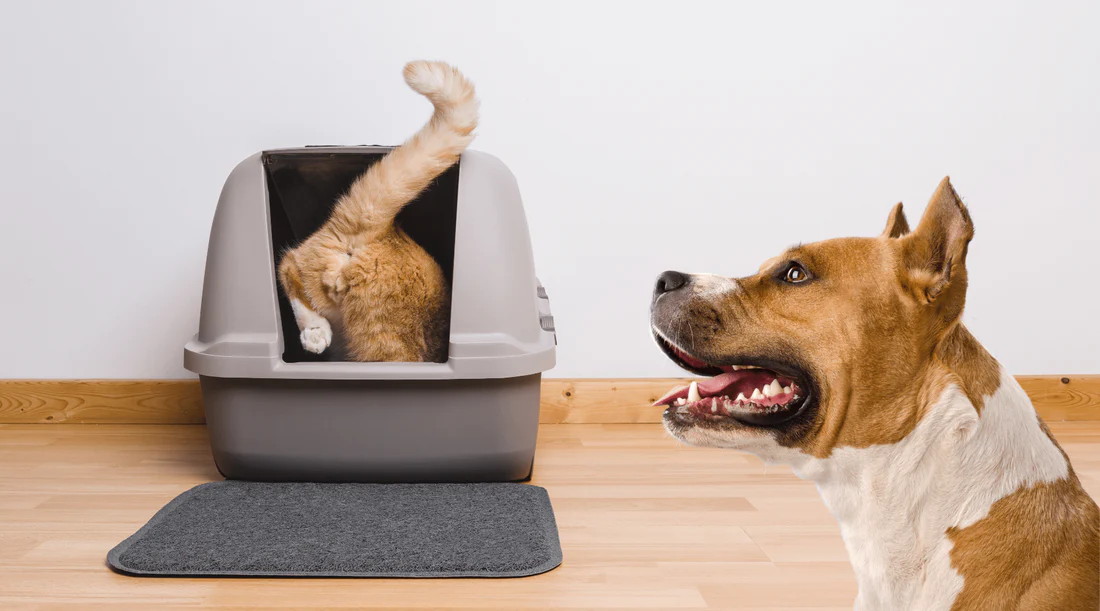
Health Risks of Eating Cat Feces
Eating cat feces can expose your dog to parasites and bacteria. Cat waste may contain organisms such as roundworms or microbes that could affect your dog’s health. These may lead to digestive discomfort or mild infections. Prevention is usually easier than treatment.
Some types of cat litter contain chemicals or clumping agents that may cause mild stomach upset if ingested. Repeated exposure could increase sensitivity over time. Consider this when choosing litter products.
Bad breath and hygiene are other issues. Dogs that eat feces may carry bacteria in their mouths. These can spread through licking or close contact. This is unpleasant and can be unsafe for humans. Clean habits matter.
Serious health problems are rare but possible. If your dog shows symptoms such as vomiting, diarrhea, or loss of appetite after eating cat feces, a veterinary visit is recommended. Quick action can prevent complications.
Some risks may not be obvious, so it is important to remain vigilant.
Practical Ways to Stop This Behavior
Preventing access to the litter box is one of the best solutions. Place the box where your dog cannot reach, such as behind a gate or on a high surface. Limiting access removes temptation. Simple barriers work well.
Training your dog is important. Use commands like “leave it” and reward your dog when it obeys. Positive reinforcement builds better habits over time. Consistency matters.
Improving your dog’s routine can lower boredom. Make sure your dog gets enough exercise, such as 30 minutes of walking or play daily. Mental activities, like puzzle toys, also help. A busy dog is less likely to form bad habits.
Here are a few steps to follow:
– Move the litter box to a restricted area
– Train your dog with simple commands
– Feed balanced, high-quality meals
– Increase exercise and play
– Clean the litter box often
While some dogs may require extra support, others may adapt quickly.
When to Seek Professional Advice
If the behavior continues despite your efforts, it may be time to consult a professional. A veterinarian can check for underlying health issues that may be causing the problem. Medical conditions should be ruled out first. Proper diagnosis is important.
A dog trainer or behavior specialist can also help. They can provide tailored strategies based on your dog’s personality and habits. Training methods vary depending on the situation. Expert guidance can make a difference.
Persistent behaviors may need a mix of diet changes, training, and environmental shifts. This approach takes patience and time. Results are not immediate.
Working with professionals helps you address both the cause and the behavior. This helps your dog develop better habits. It also keeps your home clean and safe.
Dogs may exhibit strange habits, yet most have clear reasons behind them. By understanding the reasons behind the behavior, managing your dog’s environment, and providing proper care, you can guide your dog toward better behavior and reduce the likelihood that this habit will return.