
As a licensed veterinarian practicing in Texas for over a decade, I’ve had countless conversations with cat owners who are startled by a sudden change in their pet’s behavior around food. A sweet, affectionate cat can transform into a growling, swatting, tense animal the moment a bowl hits the floor.
Food-related aggression in cats is more common than many people realize. In my experience, it’s rarely about a “mean” personality. It’s usually about anxiety, competition, past deprivation, or medical discomfort that hasn’t yet been recognized.
Understanding why it happens is the first step toward changing it.
What Food Aggression Actually Looks Like
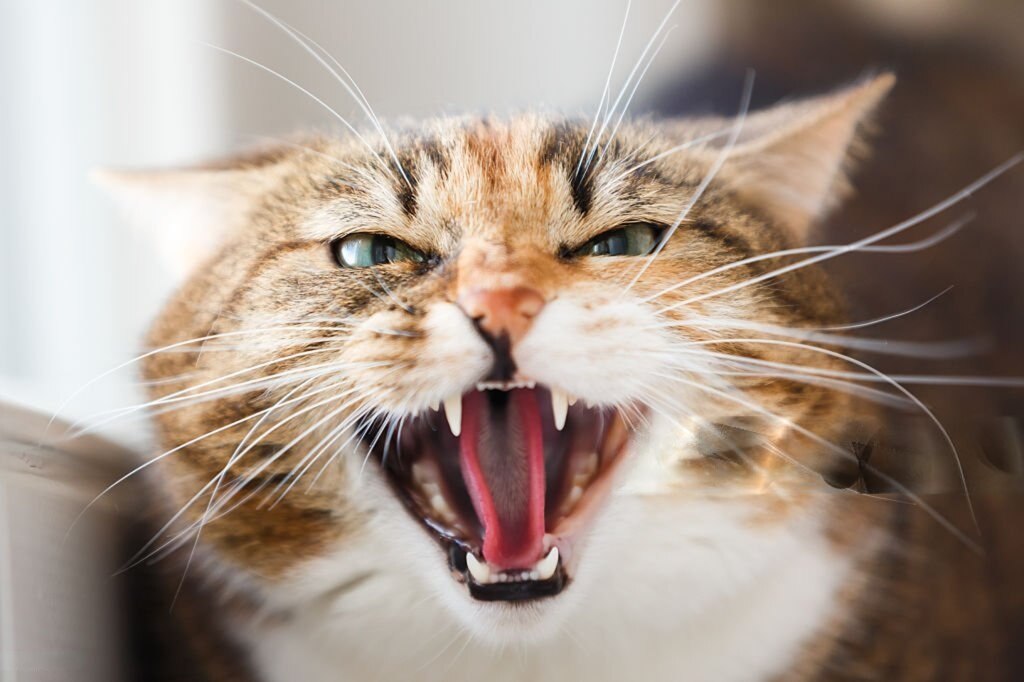
Aggressive behavior in cats can show up in subtle or dramatic ways. Some cats simply hover and guard the bowl. Others will swat at other pets, block access to the feeding area, or even redirect aggression toward their owners.
Last spring, a client brought in a young rescue cat who would growl anytime anyone walked near her while she was eating.
The owner assumed it was dominance. After talking through the cat’s history, we learned she had been found underweight and competing with multiple animals for scraps. The aggression wasn’t dominance. It was the fear of losing access to food again. That distinction matters.
Common Causes I See in Practice
Resource Competition in Multi-Cat Homes
In multi-cat households, food competition is the most frequent trigger. Even if bowls are set side by side, cats don’t interpret that as equal access. They see proximity as a threat.
I once worked with a family who fed their three cats in a neat row along the kitchen wall. Every evening, the same pattern played out: one confident cat would eat quickly, then shove the others aside.
The quieter cat started hissing before meals even began. Moving feeding stations into separate rooms reduced the tension almost immediately.
Cats prefer distance and privacy. Feeding them shoulder-to-shoulder is something humans find organized, but cats find stressful.
History of Food Scarcity
Rescue cats, former strays, or animals from hoarding situations often develop guarding behaviors. I’ve found that these cats eat faster, tense their bodies over the bowl, and may lash out preemptively.
One older cat I treated had been adopted from a rural property where he had to fend for himself. Years later, in a stable home, he still gulped food and swatted at the family dog if it wandered too close. His behavior wasn’t about the current danger. It was about learned survival.
These cases require patience. The behavior was built over time and won’t disappear overnight.
Medical Triggers
This is the piece many owners overlook. Pain and metabolic changes can intensify food aggression. Hyperthyroidism, diabetes, intestinal parasites, or even dental pain can make cats feel persistently hungry or uncomfortable while eating.
I remember a middle-aged cat that suddenly began biting its owner’s hand during feeding. The owner thought it was behavioral. Bloodwork revealed early hyperthyroidism. Once we stabilized the thyroid levels, the aggressive edge softened significantly.
If food aggression appears suddenly in an adult cat, I strongly recommend ruling out medical causes before assuming it’s purely behavioral.
Mistakes I Frequently See Owners Make
One of the biggest mistakes is punishing the behavior. Yelling, spraying water, or physically removing the bowl reinforces anxiety. From the cat’s perspective, food really is under threat.
Another common error is free-feeding in tense households. While grazing works for some cats, in competitive environments, it often increases guarding. Scheduled meals, spaced apart, are usually more effective.
I also discourage forcing cats to “work it out.” Cats are not pack animals. They don’t establish food hierarchies in a healthy way, as some dogs do. Persistent conflict leads to chronic stress.
Practical Steps That Actually Help
In my clinical experience, these adjustments produce the most consistent improvement:
Feed cats in separate areas, ideally out of sight from each other.
Use puzzle feeders for cats who eat rapidly or guard bowls.
Maintain consistent feeding times to reduce anticipatory anxiety.
Ensure each cat has its own food and water station.
Address underlying medical concerns promptly.
Use puzzle feeders for cats who eat rapidly or guard bowls.
Maintain consistent feeding times to reduce anticipatory anxiety.
Ensure each cat has its own food and water station.
Address underlying medical concerns promptly.
For severe cases, short-term anti-anxiety medication can be helpful while environmental changes take effect. I don’t prescribe it lightly, but in certain households, it prevents escalation and injury.
Reading the Subtle Signals
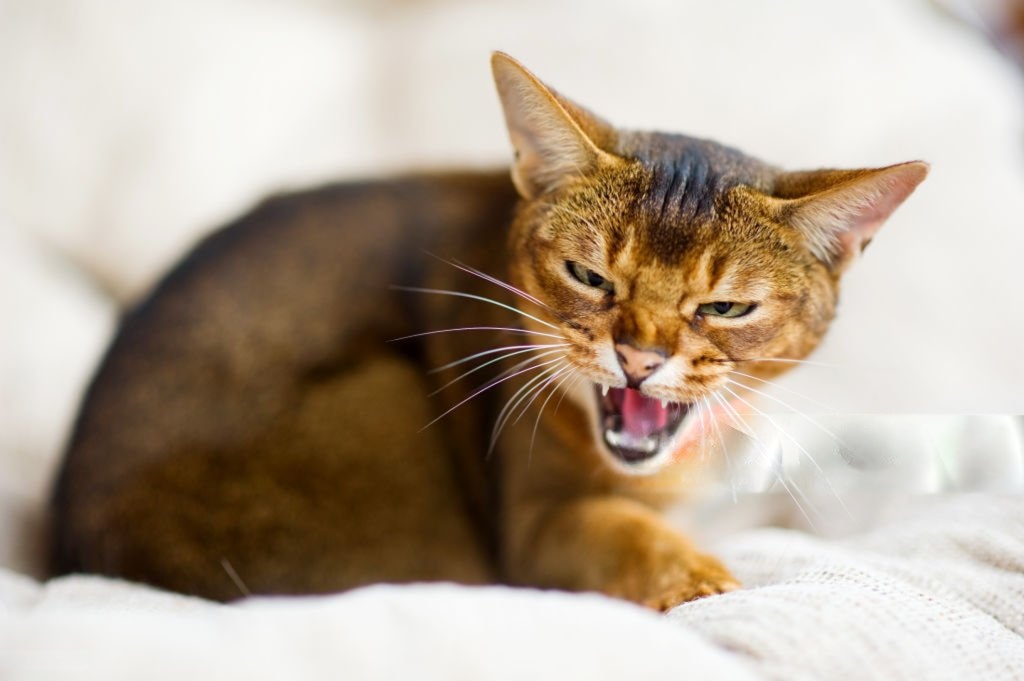
Owners often wait until there’s hissing or biting. But food aggression usually begins quietly.
Watch for:
A stiff body posture during meals
Ears slightly turned back while eating
Speed-eating followed by guarding
Blocking behavior near feeding areas
Ears slightly turned back while eating
Speed-eating followed by guarding
Blocking behavior near feeding areas
Catching it early makes intervention much easier.
My Professional Perspective
Food-aggressive behavior in cats is almost always rooted in insecurity, discomfort, or competition. It’s rarely about dominance or spite. In over ten years of practice, I have yet to meet a cat who guards food “just because.”
With thoughtful management, most cases improve dramatically. The key is shifting the focus from control to security. When a cat feels confident that food is predictable, protected, and not under threat, the aggressive edge tends to fade.
Change happens through understanding each cat’s past, environment, and health—and responding accordingly.