
I run a small in-home cat boarding service and spend most of my days watching feline behavior up close, including the less glamorous moments around the litter box. Over the years, I have noticed a pattern that confuses many owners. A cat finishes using the litter box, hops out, and starts meowing like it has an announcement to make. I have heard it from shy rescues, confident house cats, and even seniors who barely make a sound otherwise. It feels odd at first, but there is usually a reason behind it.
It’s Not Always About Pain
The first thing many people assume is discomfort, and I understand why. If something happened in a bathroom and a person started yelling afterward, we would worry too. But in my experience, most cats that meow after pooping are not in pain. I have watched dozens of cats do this right after a normal, well-formed bowel movement with no signs of straining or hesitation.
There was a cat I boarded last winter who did this every single time. He would finish, cover the litter with dramatic enthusiasm, and then walk into the hallway calling out as if he had lost something. His appetite stayed strong, his energy levels were steady, and his stools looked completely normal over a ten-day stay. That kind of consistency usually rules out anything serious.
Still, I never ignore the possibility entirely. If the meowing sounds strained or urgent, or if it suddenly starts in a cat that was previously quiet, I take a closer look. Behavior alone does not diagnose anything, but it can point me in the right direction.
A Communication Habit I See All the Time
Cats are more vocal than people give them credit for, especially in a home setting where they have learned that humans respond to sound. Some cats treat the litter box routine as a moment worth announcing. I have seen it act almost like a check-in: the cat finishes its business, then calls out to confirm its presence.
I sometimes suggest that owners observe patterns or even consult a pet behavior consultation service if the vocalizing becomes excessive or confusing over time. That extra perspective can help separate a harmless quirk from something that needs attention. A trained eye often spots patterns faster than a worried owner who sees the behavior only once or twice a day.
One of my regular boarding clients has a female cat who meows only after pooping, never after urinating. She walks out, makes two or three short calls, then settles down as if nothing happened. It is consistent, predictable, and almost ritualistic. That kind of repetition usually points to communication, not distress.
The Post-Bathroom Energy Burst
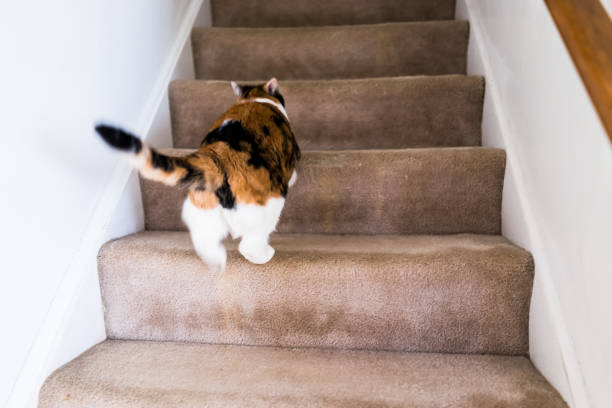
Some cats get a burst of energy after relieving themselves. I have seen cats sprint across a room right after using the litter box, sometimes sliding on tile floors or jumping onto furniture. The meowing can be part of that same release, like shaking off tension or signaling excitement.
This tends to happen more in younger cats or those with higher energy levels. A cat that has been lounging for hours might suddenly feel lighter and more active after a bowel movement. The body shifts, and the behavior follows. It is quick and often a little chaotic.
Short bursts are normal. Very normal.
I remember a young tabby that stayed with me for a week during a family vacation. Every evening around the same time, she would use the litter box, dash out, and let out three loud meows before chasing a toy across the room. The pattern held for seven days straight, and there were no other concerning signs. That consistency told me everything I needed to know.
Instincts That Haven’t Gone Away
Even indoor cats carry instincts from their wild ancestors. In the wild, being in a vulnerable position like squatting to defecate is risky. Some experts believe that vocalizing afterward could be tied to that instinct, either as a release of tension or a signal that the vulnerable moment has passed.
I have noticed that more alert or easily startled cats tend to do this more often. They emerge from the litter box, look around with their ears slightly turned, and vocalize before settling back into their environment. It feels less like a complaint and more like a reset.
There is no way to ask them directly. We read patterns.
Another detail I pay attention to is how the cat behaves right before entering the litter box. If the cat seems cautious or scans the room before going in, the post-poop meowing sometimes lines up with that heightened awareness. It is subtle, but after watching hundreds of litter box visits, you start to notice these connections.
When I Actually Get Concerned
While most cases are harmless, there are a few situations where I stop and investigate. A sudden change in vocalization is one of them. If a quiet cat starts loudly meowing after every bowel movement, I consider what else might have changed.
I also look at the litter box itself. If it hasn’t been cleaned in over a day, some cats react strongly to it. They may vocalize to express discomfort with the environment rather than the act itself. Cleanliness matters more than many owners realize.
Then there are physical signs. Straining, very hard stools, or signs of diarrhea paired with vocalizing can point to digestive issues. I once had a senior cat stay with me who began meowing in a lower, more drawn-out tone after using the litter box, and his stools became noticeably smaller over a few days. That turned out to be mild constipation, which improved once his diet was adjusted under veterinary guidance.
It does not take much to notice a difference. You just have to pay attention.
Watching a cat day after day teaches you its normal rhythm, and that baseline makes unusual behavior stand out quickly. That is the advantage I have in my work, and it is something any owner can develop with time.
Most of the time, that post-poop meow is just another part of your cat’s personality. It might sound dramatic, but it rarely signals a problem on its own. I have learned to treat it less like a warning and more like a small window into how each cat processes its routine.